Little Folks, Big Ideas

My third graders have been delving into philosophy, of all things. Because if little minds deserve ANYTHING, it’s the ability to wrestle with BIG ideas.

I’ve been using resources from The Prindle Institute to support our work. Our questions lately have focused on: what is alive? what is real?

After an AMAZING webinar with my hero Ellin Keene and her co-conspirator Dan Feigelson, I decided that today, I’d try taking their strategies for a spin.

Rather than falling into the question-answer-response rut, I took Ellin and Dan’s advice and posted a thought statement to see how kids might respond.

Some context. Last week, we read Lio Lionni’s Let’s Make Rabbits, which challenges our ideas about what is real, about what is ALIVE.

On Monday, I gave kids a list of different things and asked them to explain if they were alive or not. The most interesting discussion came from those grey areas: a flower in a vase, a turtle in the egg, an apple that fell to the ground. Their conversation led me to think about the idea that life may not be a binary concept.

The thought statement I posted? “I wonder if being alive or not is like an on-off switch, or more like a dimmer switch.” (Yes, I demonstrated the two from my kitchen today. =)

Things I’ve learned:
1) There’s an ART to teaching this, and to structuring it for student success.
2) I didn’t quite get there.
3) Even the messy results were still pretty cool.

Some student thoughts/reflections from the day that made me smile:
-I am now wondering how people started.
-Something new I thought about today is what is real and not real.
-A dimmer light is like a person growing up.
-When you turn a dimmer switch, it’s like a person getting older and when it gets to the darkest point it’s like the person dying.
-Can life be pain?
-Is your imagination alive?

This, from eight year-olds. Friends, the world is in good hands.

A Thing of Wonder

Today I saw an owl.

It glided over and lit in my next-door neighbor’s tree just as I was returning from a walk at dusk. There it sat, easily a foot tall and several inches across.

It was a thing of wonder.

It sat long enough for me to walk through the front door of my house.
Long enough for me to shout to my boys, “Guys! There’s an OWL!”
Long enough for them to ignore me.
Long enough for me to quietly slip out the back to get a better look.
Long enough for me to slip back in for a flashlight to see better.
Long enough for me to turn that flashlight on and

Remind me that
A thing of wonder does not need me to
Stop in my tracks
Take a moment
Catch my breath
Stare in awe
Take a picture

Wonder will be wonder,
Whether or not
We bear witness.

Upon Re-Entry

From a flower fairy

I’ve been here.

I’ve returned to school after a devastating loss before, and I did it again today.

Days like these are strange, tiring and full of uncertainty. Will I be able to hold myself together? Can I make it through? Do I have it in me to accept the “we missed you’s,” the knowing eyes and nods, and not break down into a blubbery mess?

I felt like one of those candies – the cherry cordials. The one with the waxy hard shell and the super gooey insides.

I hate cherry cordials.

Had it not been for the “soft landing” gifts my colleagues left me –

had it not been for the air hugs I was offered in the hallways –

had it not been for texts with little more than a heart or the word “hug” –

had it not been for friends to arrange dinner, or a bottle of wine, or an errand –

had it not been for supervisors who offered grace and assistance beyond what I could hope to expect –

had it not been for family members who gave unconditional support and validation –

had it not been for the notes of sympathy from students of mine who just wanted to reach out –

had it not been for flowers that awaited me after a long drive home from the funeral –

had it not been for my husband and son, whose physical presence at that funeral meant more than I could say –

had it not been for the power of hugs when they are discouraged but so desperately needed –

had it not been for a family not my own to take me as one of theirs in a time I felt utterly alone –

had it not been for friends who held me in love and compassion in those early nightmarish days –

this strong shell, already cracked to pieces, most certainly would have shattered.

Encouraging Signs

It all started with a super-cute dog video.
(Go ahead and watch. it’s only about a minute long.)

And then a question. “Is this language?”

Boy oh boy, did THAT ever stir up conversation. For me, as a teacher, this could not POSSIBLY have gone any better.
I wanted students to be engaged from the get-go. Check.
I wanted them to be excited to talk about big ideas. Check.
I wanted them to be curious about stuff they didn’t know. Check.
I wanted them to have conversations about difficult things without getting into arguments. Ch-well, no. We have some work to do on that one.

But the fruits of their labor are spectacular. Small groups worked together to develop rules for what language is. Here is their work, collected together:

Rules for Language:

Only represents part of communication 
A code that uses sounds, symbols, signals
Has to convey meaning and be understood by who is using it
Needs to be consistent
Set grammar and structure
Many people share
People can both understand and talk back
It can be translated to other languages
Doesn’t have to be spoken
Don’t always need a recipient-can just be for self-expression
Verbal language involves phonics, structure
The symbols and codes can change, but people need to know about it
People have to USE it
Requires socially shared rules

Whoever said that 10 year-olds are not ready for thinking about and exploring big ideas, I offer you THIS as evidence to the contrary.

And this is only day TWO of our work together. Am I excited to see where this goes? Maybe a little.

On College Education

Well. Looks like I’m stepping back up on to my soapbox. What’s got me so fired up this time?

My college son called me to chat about one of his professors. Things have gotten so bad that students banded together and complained to university higher-ups, so much so that the department issued its course evaluation survey halfway through the semester.

After hearing my son read his responses listing the numerous ways in which this class and its instructors have fallen short, I found myself really,

really,

REALLY wanting to call up this department and give them a piece of my mind.

But I’m not that kind of gal. Besides, it sounds like the students are already advocating quite well for themselves.

Still, as someone who dedicates her entire life and livelihood to the pursuit of excellence in teaching, I can’t just let this go.

So here’s what I WOULD say, if I were one who would say it.

Dear Professor,

Let me start by saying this. Your job is HARD. You’ve been asked to step in for the very first time to teach this undergraduate course. What’s more, you’re being asked to do it in the middle of a pandemic, and while the university is doing everything it can to protect your life and the life of the students, we are in a scary time. And you are being asked to teach in ways that your predecessors never had to consider.

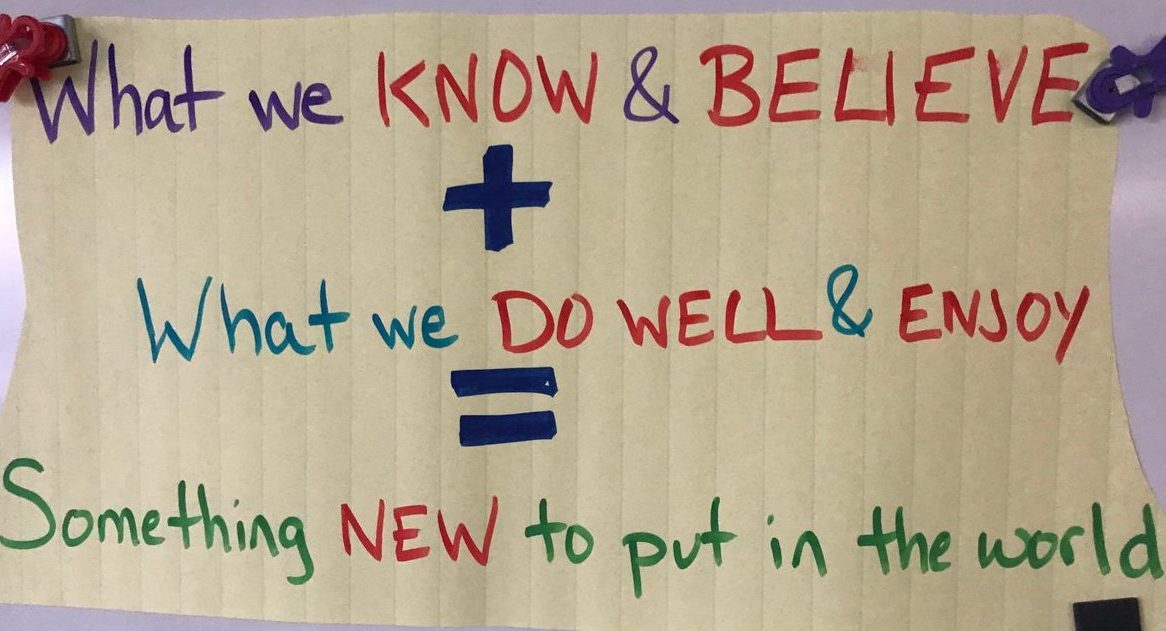
What I’m imagining you think and believe right now? First of all, that you really know your stuff. You know that the class you’re teaching is HARD, and it requires you to teach an encyclopedic amount of information. I’d also like to believe that you truly want what’s best for your students. And I’m also wondering if you’re starting to realize that KNOWING material, and being able to teach it MEANINGFULLY are two separate animals.

I’m also going to guess that you were thrown into teaching this course without any training or support in pedagogy, or the foundations of teaching. I’m going to guess that the preparation and mentorship you were given as an instructor may have been limited to a copy of the syllabus as it had been previously, as well as your own experiences when you were a student.

I can’t fault you for that. You are a part of a bigger system that values the quantity of content over its instructional delivery. You are a part of a bigger system that values publishing credentials over the craft of teaching.

I also imagine you think I may be speaking out of turn, that as an elementary teacher I don’t have enough understanding of college students to know what good instruction looks like at the collegiate level.

I’m going to be straight with you. Good teaching is good teaching is good teaching. Let me repeat that. Good teaching. Is good teaching. Is good teaching.

The same foundational principles that apply to teaching first grade will resonate with fifth grade. With eighth grade. With high schoolers. With college students. With anyone. Why? Because at the heart of things, we are all human beings. We are curious. We learn when we are motivated. We crave connection, feedback and growth.

I’m guessing the complaints you’re getting right now feel pretty terrible. Critical feedback, especially in this volume, can really sting. But it’s also a wake-up call. You can be better. You can improve the experience for all. How? Here are a few places to start:

1. Respond to your students’ communications promptly and sincerely.
2. Give your students meaningful, prompt feedback on their work.
3. If you can’t give meaningful and prompt feedback, it’s a sign. You are assigning too many things. Pull back.
4. During classes, use presentations as a starting point rather than a script. Your students will engage more, and retain more, if there is context and explanation of the material.
5. Be a person to your students. If they connect with you, they’ll connect with the material.

Maybe this way of teaching is different from how you learned this content. Maybe this way of teaching isn’t valued in a system like the one you are in. Maybe you haven’t gotten the guidance and mentorship you needed as an instructor. But from one educator to another, we both know this is how we best learn, and we know it is what our learners deserve – no matter the level.

You can do it. I have perfect faith in you.

Teacher Life, Exhibit P

Scene: Indiana Dunes State Park. I’m hiking with my husband. It’s a cool, crisp early autumn day, the wind is at our backs, and we have the place to ourselves. The only sounds in my ears are the crashing of waves, the crush of hiking boots on sand, and the echo of my thoughts. It’s the perfect space for spiritual reflection, for connecting to the universe.

Me, lost in thought: Hey!

Husband: What?

Me: I just thought of a really cool lesson idea using just the first chapters of a bunch of novels.

Husband: Do you ever stop working?

Me: …

So…no. The answer is no. There will always be something that gets me started. I might be thinking about that one kid. Or a book line that makes me think about a lesson I’ve taught. Or a blog post that I need to share with some loveys.

Or. or. or.

Long Day

Today was hard.

It was long, and it felt heavy in my hand and in my heart.

It was full of colleagues, and students, and friends, and family members, who are struggling in one direction or another, and who needed time and love and attention and compassion.

And I gave it, in one direction or another, as many times and in as many places and to as many people as I possibly could.

And I hope that this day, as heavy as it was, might have been made just a touch lighter in one direction or another. Because I know that there will be a day when I am struggling in one direction or another, and I will need time and love and attention and compassion.

Until then, there is cake.

Requiem

From wikimedia commons. But…the picture that would BEST go with this poem? It’s on the side of a fridge somewhere, or somewhere in a big dusty photo album, or framed by someone’s bedside, or in someone’s wallet, or or or…

As we scroll through our newsfeeds
And text one another
And see post after post after post
And listen to the news
And speak to one another
Of her passing –

As we mourn her presence
In our world, her strength
In the face of adversity, her voice,
Silent –

As we claim her loss
With our own grief –

As we remember
Her work
Her dissent
Her fearlessness –

I can’t help but think
Of the shiva-sitters, her survived-bys:
Her children
Her grandchildren

Gathered together at home,
Sometimes hushed
Sometimes noisy in conversation
Celebrating a woman
Who sometimes kept condiments past their expiration
Who always answered the phone a certain way,
Remembering together
What soap she kept in the guest bathroom
Which living room chair was her favorite
What stories she read them
What kind of hugs she gave
How her hands felt to hold them

I think on them, and I see
Our own grand pain
Our outsized grief and agony
Writ small,
Etched deep.

in memory of Ruth Bader Ginsburg, 1933-2020

So…How Are You?

“Plugging along.”
“About as well as I can be.”
“Chugging along.”
“Just fine, which is all about any of us can ask.”

These words come out of my mouth repeatedly. Perhaps you find yourself giving the same responses.

To tell you the truth, that really is where I am. I’m…okay, I guess. I’m doing fine, which is perhaps the best I can do.

Enter a dear writing colleague, Fran, and her keenly insightful writing on what it means to thrive. Please, please, please go and read her work.

(You’re welcome.)

Like any powerful writer has the ability to do, she left me with more questions than answers. She left me with wisdom and a new perspective on how we as humans always need to grow. But she also left me in the discomfort that perhaps there is something not-quite-right about what I’m currently asking out of life right now.

The answer is no. I am not thriving right now. I can’t think of one part of my life I’d characterize as “thriving.” Growing, yes. Changing, evolving? Absolutely. But these movements run deep and pace themselves slowly. To me, thriving suggests a bursting forth, a positive leap ahead.

The more I think about it, though, there may be another dimension to my own current “failure to thrive,” something I haven’t yet fully explored:

I’m not thriving right now because I don’t feel it’s fair.

Too many among us are living the worst of their fears, their traumas, their loneliness, their poverty, their inhumane treatment, their grief. I don’t feel right claiming to thrive during a period so marked by pain and suffering.

So many people need more from this world right now. And to me, working past survival and into “thrive” mode makes me feel I am demanding more than my share.

I’m sure there’s more to explore here. There’s something to be said about claiming our space in this world, about sitting in the discomfort of our growth, and about giving ourselves permission to be the most of who we are regardless of circumstance.

For now, though, I will take my somehow-getting-along-okay and my slow, deep sea changes, and I will wear them proudly. I’ll just…keep…plugging along.

Stepping Back Up to the Soapbox

I have a lot of soapboxes to stand on when it comes to education.

I mean…c’mon. Just look at the name of my site.

from Etsy.com

It’s easy to get riled up about things when you feel as passionately I do about teaching, when you have as much faith in public schooling as I do.

One of my soapboxes is storytelling. It’s an incredible medium for sharing text that we don’t give enough credit to. People, the number of things that happen in our brains, big or small, when we hear a story being told? You could track the research here, or here, or here, or…

Aaaugh, I’m doing it again! All right, Lainie. Inhale. Exhale.

Now.

One of my storytelling soapboxes? Using storytelling as a way of crafting narrative. The way I put it is this. Our brains our lightning fast, like cheetahs. Our hands are super slow, like turtles.

When we ask children to write, we tell the cheetah and the turtle to keep the same pace.

No wonder so many kids struggle.

Oral language is that bridge, and it links our thoughts and words together in a manageable way. Think of it this way – how often do you have to talk through a problem to find a solution for it?

Through storytelling, writers at all stages of readiness understand that they hold the power of composition, even if their handwriting or typing skills don’t yet demonstrate it.

And yet oral language largely goes ignored at school, despite the fact that it’s one of the most powerful tools we have.

It’s why I had such a WIN when, a few years ago, I was able to bring a storytelling unit to one of the grades I work with. I crossed my fingers and hoped it would be in good hands with my colleagues.

Boy was it ever. I got the most amazing affirmation of my efforts in a planning meeting today, as teachers discussed their upcoming unit on personal narrative. Here are a few highlights…

Me: This might be a place where storyboarding would be great. It would help your writers use oral language to draft and organize your thoughts.

Them: Oh, we already do that!

Me: I find it helpful to sketch the first and last squares of the storyboard, then fill the action in between to build the story.

Them: Oh, we already do that! You taught us that.

Me: One trick for kids working on dialogue is to make quick puppets out of pencils and let them play with the characters.

Them: Oh, we already do that! That’s what you taught us.

Me: … (smiles inwardly, shuffles feet) …

What do I love best about these exchanges?
1. I love to learn and grow. I feel lucky to see colleagues do the same.
2. It’s affirming to know that things I see as good teaching…ARE.
3. I love making myself obsolete because others have pushed forward.

…I’d probably better stop before I get on another soapbox. Like I said, it’s easy to get riled up about things when you feel as passionately as I do…