Slice of Life Tuesday: The Power of Youth, Part Two

Last week, I shared the first part of my allegorical story. It’s a piece of fiction I wrote alongside my fifth graders. Here’s the second installment. Enjoy!


Milo and Greta continued on their way home, when a voice called to them. “You know, it wasn’t always like this.”

Startled, the pair turned to find Gregorio, the elderly beggar who roamed the streets of the village, telling stories and singing songs for scraps of food or an occasional coin. “We used to run on a different power source way back when. ‘Course, I’m the only one around here who remembers.”

Milo tugged at Greta’s elbow to get her to keep moving, but there was something about the old man’s eyes that told her this wasn’t just another one of his tales. “Hang on,” she said. “Let’s hear him out.”

Gregorio continued. “Long time ago, when I was a small boy, the village ran on different kinds of power than we have today. Coal, gas, we burned that fuel to make this place go. 

“But those power sources were too dirty. Everything got polluted. I remember it got so bad you couldn’t go outside or drink the water. All the elders got together to try and solve the problem, and none of them could think of anything.

“One of the elders looked out the window and saw us kids playing. We never ran out of energy, just played our made-up games all day. All of a sudden, that elder got an idea. She shouted, ‘Why not use the kids? They have energy and imagination for days. They can solve our problems for us!’ 

“From there, it was just a matter of developing the technology. First the helmets were perfected, and then the Imaginarius followed. So, rather than having children waste their brain energy playing or learning at school, we’ve been using kids to take care of things. It’s how things have been done for three generations now.”

He pointed into the distance. “You know, if you were to cross those mountains, you’d see rivers and forests and beaches and oceans. All those things you see in your Imaginarius? They’re real, and they exist beyond the Cogara Mountains.”

Greta was awestruck. Those were…REAL? Those beaches, with the sand and water…those are REAL PLACES? Greta stood motionless for a moment, taking it all in. Milo watched Greta’s face turn from shock to sadness to anger. 

“Wait,” Greta said. “Do you mean to tell me that the adults of the town messed everything up with the coal and gas, and they’re using us kids to fix it for them instead of taking care of it themselves?”

“Sounds about right,” came Gregorio’s reply before he shuffled off once again into the shadows.

She remained silent for the rest of the walk home, silent when Milo saw her for the next day’s shift, and silent as she went to her ThinkStation the next day.

After announcements, Greta activated her Imaginarius monitor and tapped a random selection from the WonderList. It didn’t matter anymore what she watched or listened to. Greta’s thoughts were elsewhere. Her mind raced furiously as she recalled Gregorio’s story. For hours, she thought about the way she and her fellow children were being used. As the day wore on, a plan began to form in Greta’s mind, a plan to set things right. She was so immersed, she didn’t realize it was the end of the day until she felt a hand on her shoulder. 

“Greta!”  

She turned to see Mrs. Angorio standing over her. “Congratulations, Greta. You just set a new factory record for power production. Well done!” The supervisor shook her hand and continued. “Whatever your secret is, we’d like you to share. There will be a special shift meeting tomorrow morning, and I’m personally inviting you to lead it. We’ll send our productivity ever upwards and hit all our goals. You could usher in a whole new era for Juventa!”

Slice of Life Tuesday: The Power of Youth

Lately, I’ve been writing a work of allegorical fiction alongside my students. Knowing how much I love writing fiction(!), this project is just what my writing needs: a push to get me outside my comfort zone.

Today I’ll share the first installment of the story I’ve written. Full disclosure: it wouldn’t be nearly the quality it is without the input, guidance and advice from my students.

Enjoy.


It was an ordinary day in the settlement of Juventa, a town nestled in an isolated valley among the foothills of the Cogora Mountains. The people had lived there since well before anyone could remember. 

If you visited Juventa, you might think it was an ordinary village. You’d see people living in simple homes along stony walkways. You’d see gardens full of fruits, vegetables, and ornamental flowers. You’d see fields and farms and a central square with a marketplace.

But Juventa was far from ordinary. Some towns run on solar energy. Some towns run on coal or gas. Juventa ran on the brainpower of its children. Their imagination was so strong and forceful, it was enough to keep lights on and machines running. Like each generation before them, kids worked in the factory until they reached the age of eighteen before moving on to their adult careers.  

On this ordinary day, Greta got up, had a simple breakfast, put on her blue and grey uniform, then said goodbye to her parents and made her way to the factory at the center of Juventa. It was, by far, the largest structure in the settlement, a brown, two-story brick building with thick chimneys emerging from the center. The kids from the night shift were just beginning to stream out, pale and exhausted. 


“Hey, Greta. Nice clothes. They one of a kind?”

Greta rolled her eyes and turned to face her best friend Milo, dressed in identical fashion. “Ha, ha,” she retorted. “Nice joke, Milo. You just think of that one?” 

Milo shrugged and said, “Can’t help being so hilarious.” He put his fist up like a comedian’s microphone and added, “He’s here all week, folks. Don’t forget to tip your waiter!”

We’re ALL here all week, thought Greta dimly. Every week. Every. Day.

The two friends trudged into the factory along with the rest of Juventa’s children. Ranging in age from five to eighteen, they filed through the front doors. Greta was eleven years old, so she knew the routine well: go to her individual ThinkStation and set up for the day. Her ThinkStation was just like the dozens of others: about three feet square, with a chair, her Imaginarius video monitor, and a special helmet. A voice crackled over the loudspeaker:

“Good morning, young Juventans. This is your supervisor Mrs. Angorio. Welcome to another beautiful day. When you turn on your Imaginarius, you’ll see that today’s ThinkQuota has been raised, which means we’ve got high goals for you. All breaks other than lunch have been suspended, and we will operate outside of standard hours to meet our goals. To stimulate your thinking, we have added two new options to your WonderList. You’ll see them on your opening menu. And now…let your imagination soar!”

Greta shook her head, weary of tired catchphrases and false excitement. Still, she put her helmet on, then tapped her Imaginarius to find that day’s ThinkQuota. Another high power quota, she sighed. Don’t people know how hard this job is? Greta reviewed the WonderList, browsing the options. She skipped the new offerings in favor of her favorite exploration: the sandy beach.

Instantly, the Imaginarius snapped to life with an aerial view of a white sandy beach with turquoise waters lapping at the shore. As the camera zoomed in, the sounds of seagulls, wind and waves flowed into Greta’s ears. She imagined herself there: warm, calm, surrounded by the vastness of nature. As she did, she felt the familiar buzz of the electrodes humming to life under her helmet, pulling her thoughts away from her and into the central transformers. Greta was so immersed in her own mind that she missed the call for lunch, only stopping when Mrs. Angorio’s voice interrupted her meditation:

“Thank you, young Juventans, for another strong day of work. You are free to go home.”

It was only then, after Greta shut off her Imaginarius and removed her helmet, that she realized how stiff, sore, and tired she had become during her shift.

“Man, you were really into it today,” said Milo.

“Yeah,” agreed Greta. “There’s something about the beach that gets to me.” She rolled her head to stretch her neck. “I just wish…” her voice trailed off.

“…you wish it were a real place. I know. All of us do. That’s why it’s so powerful, you know. That’s how we keep the lights on.”

Milo and Greta continued on their way home, when a voice called to them. “You know, it wasn’t always like this.”

Slice of Life Day 20: GG’s Charoset

…has to be served in a cut-glass bowl. You’ll need sweet red apples – only not the red delicious, please. Those are terrible and not worth serving to anyone.

Pick out a whole big mess of red apples at the grocery store. Mix ’em, match ’em, but for the love of all that’s right and good, only pick apples you’d want to eat plain (see the note about red delicious above).

On the day of (several hours before, if you know what’s good for you), core the apples and grate them in the food processor. You could grate them by hand, but that’s not Grandma did to them, I’ll tell you THAT.

Pick out all the flaps of apple peel that are way too big, and dump the grated apple in a big old bowl.

Start with a generous pour of Mogen David (the grape, not that blackberry nonsense). It’ll stop the browning (in favor of a reddening)? Get the apples all coated.

Next, work in the nuts. Grandma used chopped walnuts and pecans, and because I’m a snob about it, I toast the nuts first. Toast them, don’t toast them (really though. TOAST THEM), just put ’em in and be generous about it. Mix it all together nicely.

Grab some honey and squeeze it around over the top of the mixture. Go by taste. Is it good? Great.

Now you’re ready to shake on cinnamon. Grandma GG would douse the bowl straight from a jar you’re sure is old enough to vote, but we don’t need to get into that. You’re better off with something from this decade.

Shake that cinnamon generously, then stir and add more ’til it tastes roughly how you remember it. You’ll feel it all the way down in your feet.

Transfer it to that cut-glass bowl and throw it in the fridge, but take it out every so often to 1) stir it, and 2) test it on some matzoh to make sure it hasn’t been poisoned.

Serve it in dollops on the individual seder plates, in bowls for the table, and save enough for breakfast. You’ll thank yourself.

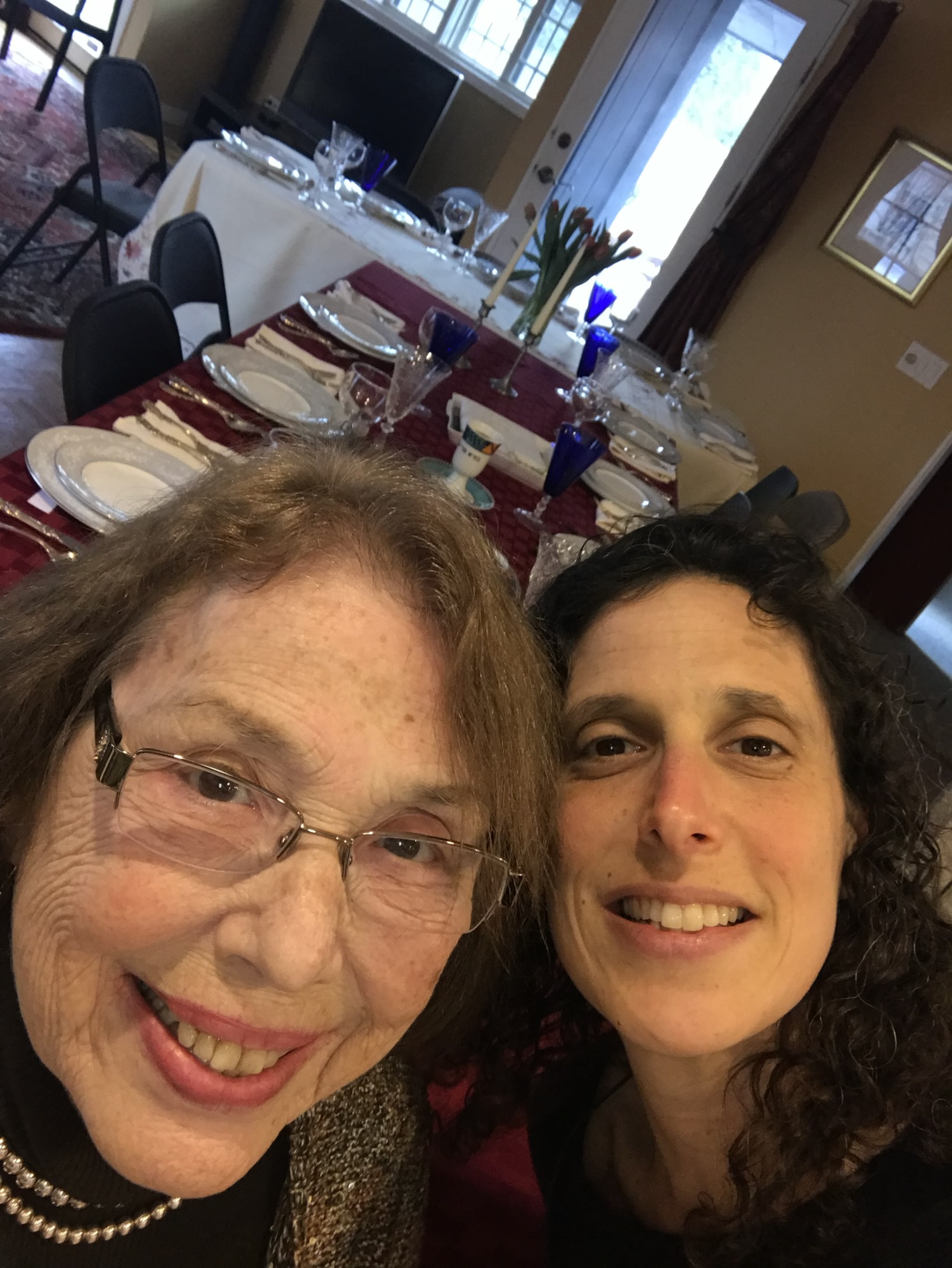
Picture of two women in front of a passover table
Me and mom, getting ready for The Big Event. And yes. I miss her. Dearly.

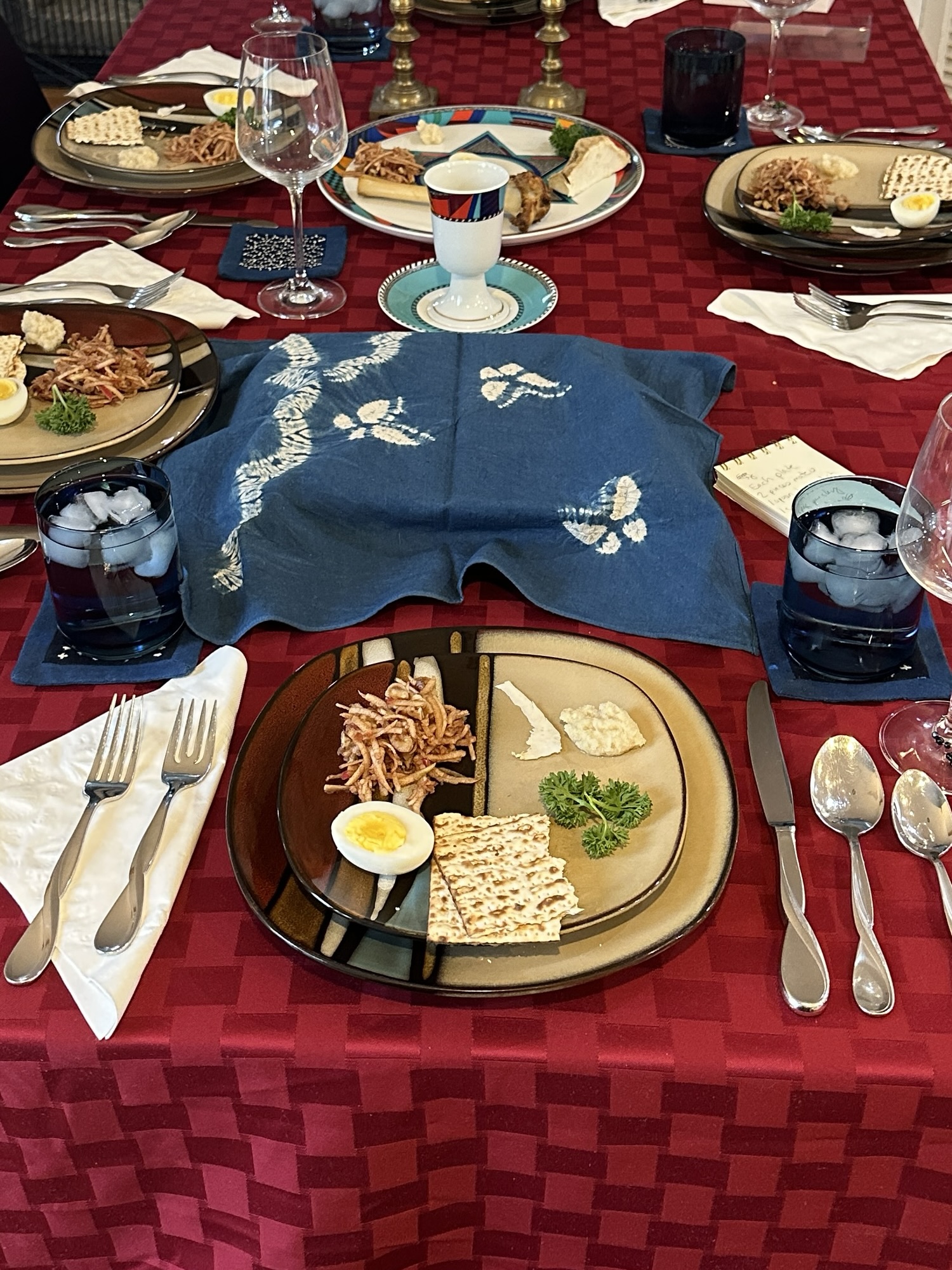
Photo of a passover table
Ready to go!

Slice of Life Day 19: A Writerly Life

…is punctuated today by a Thursday night online writing group facilitated through Two Writing Teachers. I’ve been looking forward to it all week. How lovely it is to visit with other folks – some doing the March challenge, some not.

I could pretend that I managed my time well enough today that I had the chance to eat dinner before hosting the group, but that’s a pipe dream. So, burrito in hand, laptop tucked under the arm, I made my way to the back bedroom to greet my fellow writers.

We had a couple different prompts to start with: a family meal / recipe, or descriptive writing about a family car. After splitting up to write for about fifteen minutes, we regathered to share what we did.

I love this group. I love hearing about what others write, how they approach their writing, and where their thinking takes them. I love being around others who are open to starting with an idea and letting it take them where it wishes. I love the delight writers take in being surprised by what their words can do.

As for my writing this evening, I’ll share it in tomorrow’s slice. =)

Slice of Life Day 18: Back to Fiction

My fifth graders have begun writing allegorical stories, and I’m joining them. We’ve identified issues we feel strongly about, and we’re crafting short fiction to serve as metaphor for the problems we’d like to solve.

I’m not ready to give away my issue, but perhaps you can identify it – or at least some traces of it. I’ve just got the bare beginnings, so now I have the unfortunate task of moving the plot forward.

Send mojo.

Here’s my excerpt:

It started on an ordinary day in the settlement of Juventa, a town nestled in an isolated valley among the foothills of the Cogora mountains. The people had lived there since well before anyone could remember. 

If you visited Juventa, you might think it was an ordinary village. You’d see people living in simple thatch huts along stony walkways. You’d see gardens full of fruits, vegetables, and ornamental flowers. You’d see fields and farms and a central square with a marketplace.

But Juventa was far from ordinary. You see, some towns run on solar energy. Some towns run on coal or gas. Juventa ran on the power of its children. Their imagination was so strong and powerful, it was enough to keep lights on and machines running.

If you asked a Juventan why, exactly, they ran on children instead of coal or gas or solar, they’d shrug their shoulders and tell you that’s how it’s always been, since well before anyone could remember. 

And it was on this ordinary day that Greta got up, had a simple breakfast of porridge, put on her blue and grey uniform, and made her way to the factory at the center of Juventa. It was, by far, the largest structure in the settlement, a brown, two-story brick building with thick chimneys emerging at the center. 

“Hey, Greta. Nice clothes. They one of a kind?”

Greta rolled her eyes and turned to face her best friend Milo, dressed in identical fashion. “Ha, ha,” she retorted. “Nice joke, Milo. You just think of that one?” 

Milo shrugged and said, “Can’t help being so hilarious. He’s here all week, folks.”

We’re ALL here all week, thought Greta dimly. Every week. Every. Day.

Slice of Life Day 17: On Professional Learning

Our district moved to the HMH “Into Reading” language arts curriculum this year. After experiencing some success the last few years with a homespun writing initiative, there have been growing pains, for sure. So when our Assistant Superintendent asked me if I wanted to lead some writing work, I jumped at the chance. Today, a colleague and I taught two half-day sessions on writing, with a focus on bringing back some of the joy and choice teachers helped foster.

My partner and I laid out our plans:
– have teachers engage in writing
– discuss what the experience felt like
– connect that to the work we do with students
– examine how we can streamline practices to allow student independence and choice
– engage in sustained, collaborative planning

Sounds simple, right? Well…that depends. Let’s just say one group was game, and the other…not so much. I was about a half hour into one group and I couldn’t shake the feeling that I was ACTIVELY BOMBING, with very little hope of shelter or retreat.

And here’s the thing: I’ve run dozens of workshops, and I’ve dealt with weirdness from participants. Not everyone is up for every PD all the time. Some activities and discussion questions are a swing and a miss, at best. Teachers, too, are notoriously terrible class members. There’s also educational “baggage” teachers carry into meetings or training.

I can’t lie, though. Seeing it come from colleagues I work next to every day? That’s hard. I’m not surprised, because it’s happened to me before with the same folks. So I don’t know why I would have expected today to be any different. I guess I’m just…sad, for all the reasons. At this point, I could dig in and pout that I had a contingent of folks who – for whatever reasons – pushed themselves out of reach.

Or.

I could focus my energy back into the folks – at both sessions! – who brought their hard work, their sincerity, their eagerness to make things better for themselves and their students. I could be proud of the work we’ve done to center students in the learning experience.

Yeah. That feels better. I think I can sleep okay tonight.

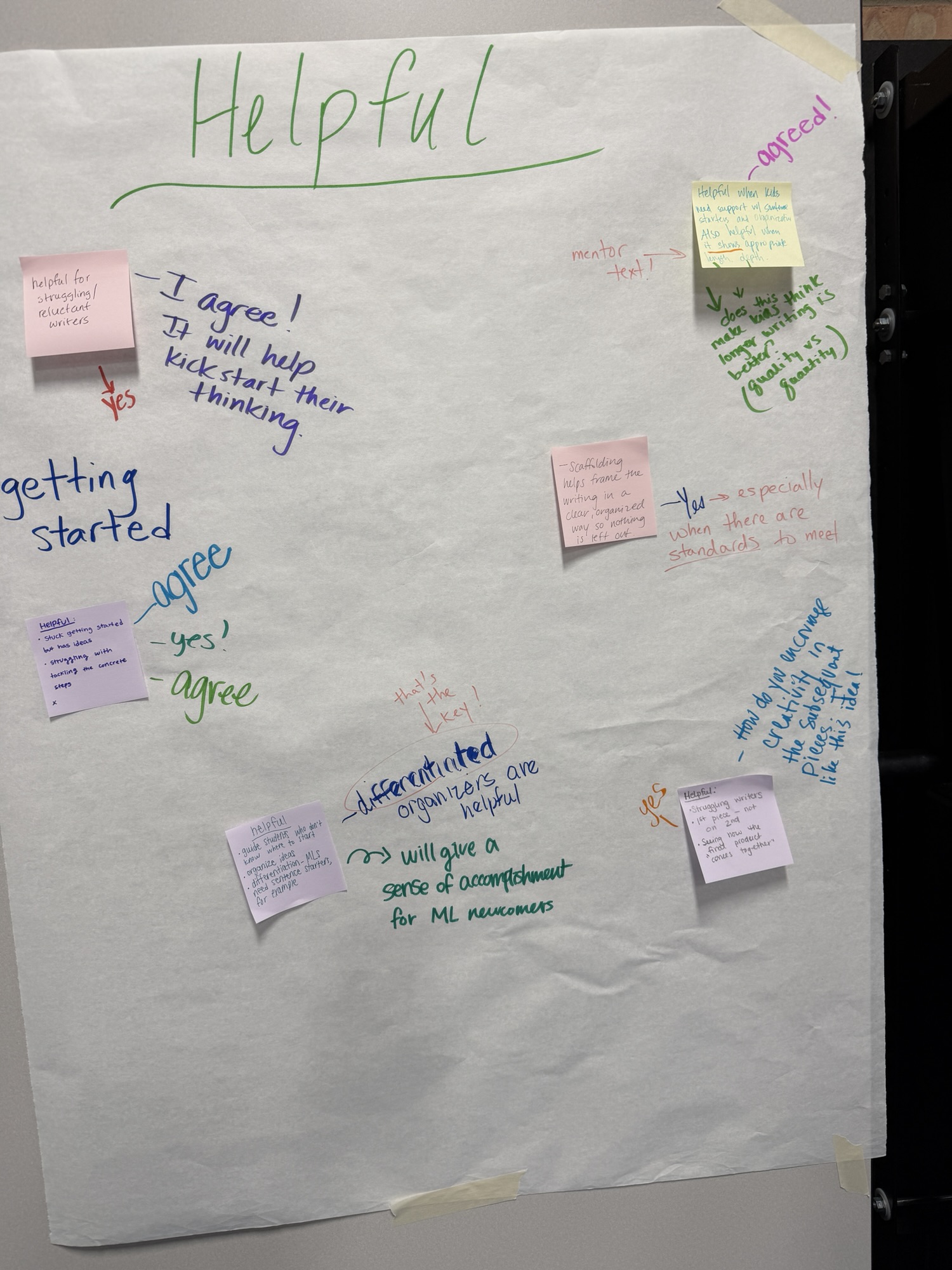
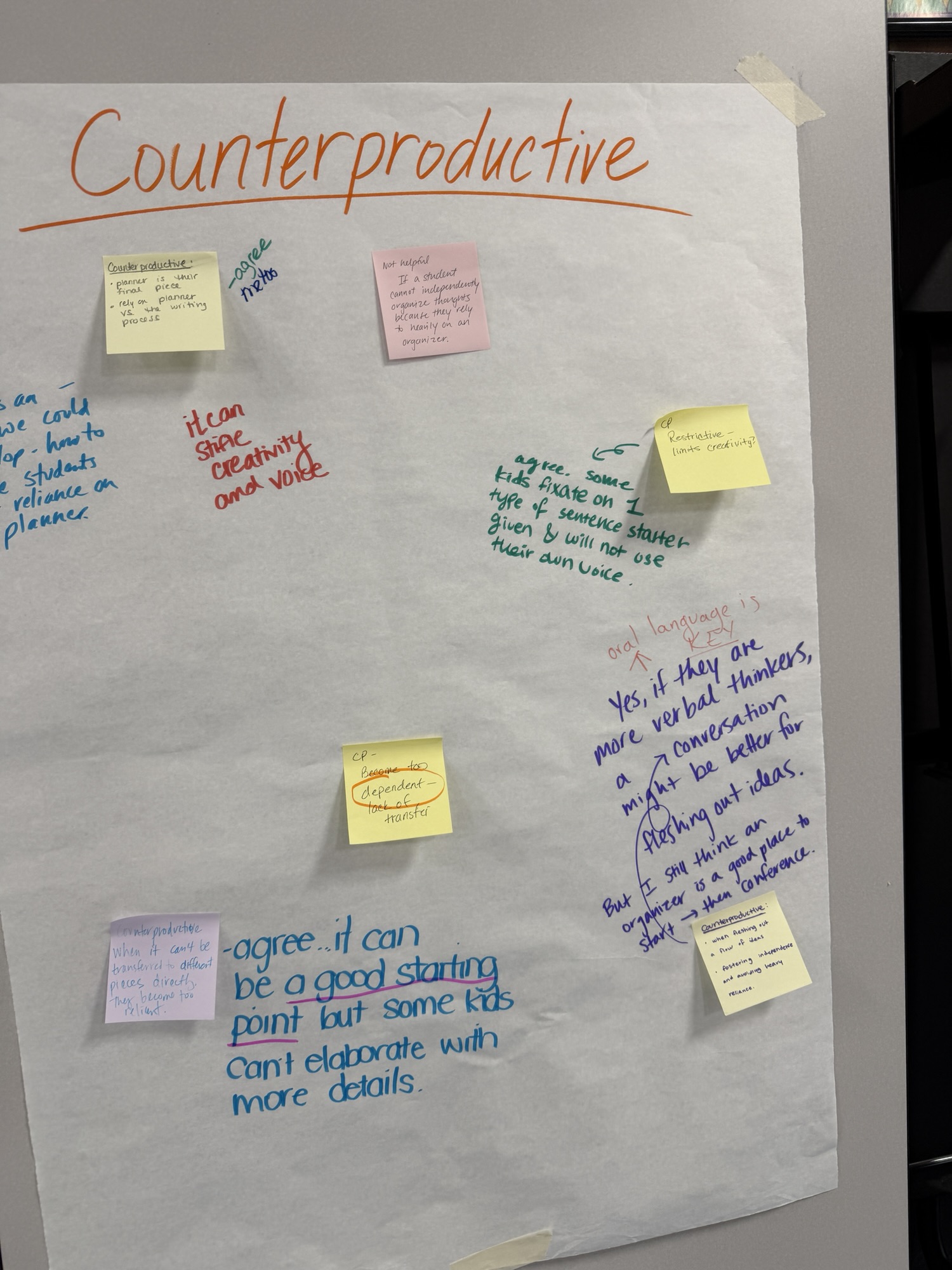
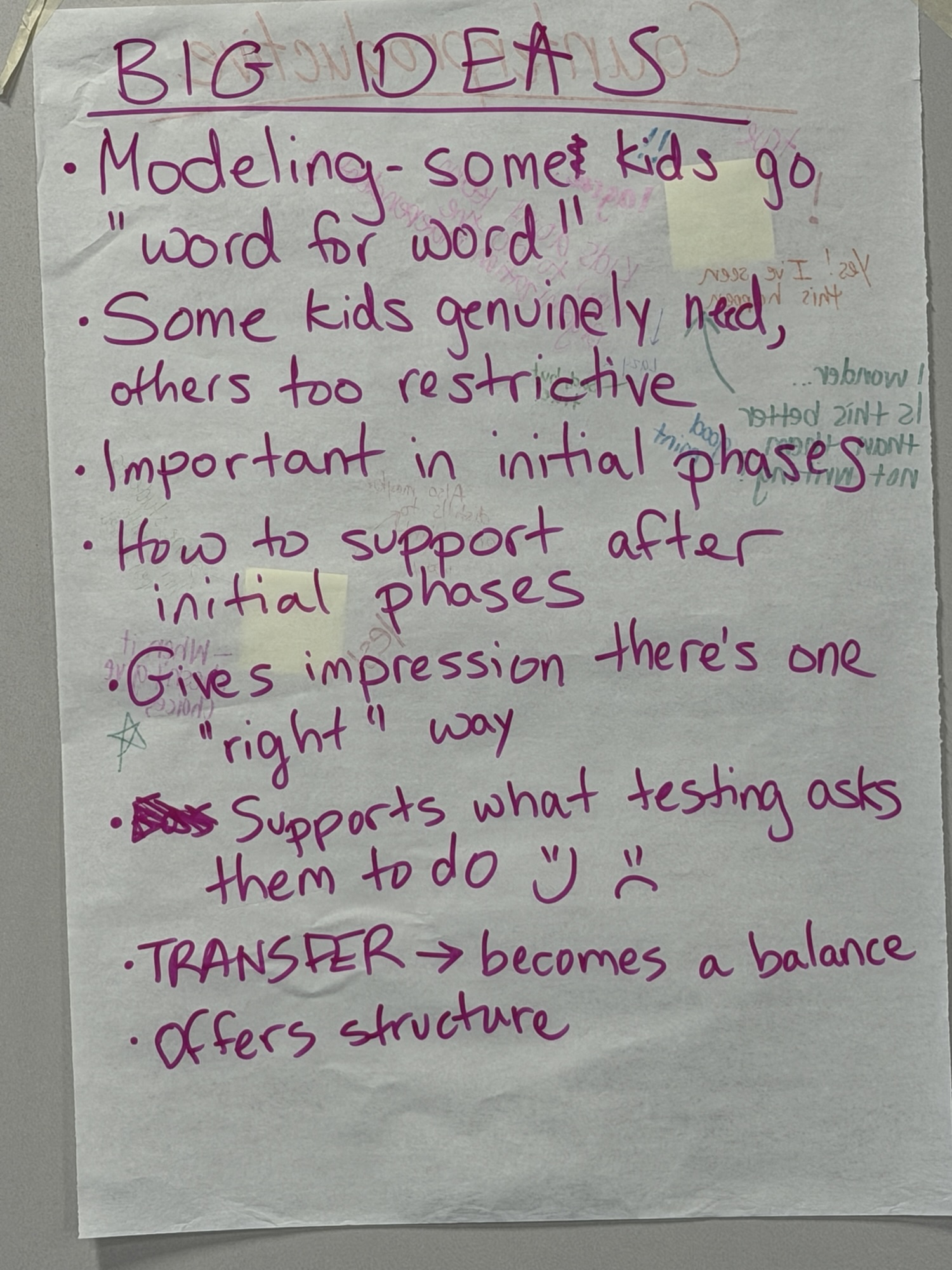
Chart paper with notes
Teachers reflected on “big ideas” about scaffolding instruction

Slice of Life Day 16: Contentment

I went to sleep last night with a full heart. It was my turn to host an online Slice of Life meet-up. I had already interacted with most everyone online, so it was especially wonderful to see and hear the people the writing came from.

All of us were longtime teachers, one retired, two on the cusp, and two very much in the thick of things. We stretched across the U.S. from coast to coast. The conversation was free and easy, and it was a reminder of how much I love this experience year after year.

And think: behind every comment each day, behind every blog, is an amazing human waiting to be known, appreciated, seen. Just knowing that is a comfort in a world where it’s harder and harder to be human.

So today, I’ll take my little scrap of hope, tuck it in my pocket, and move forward.

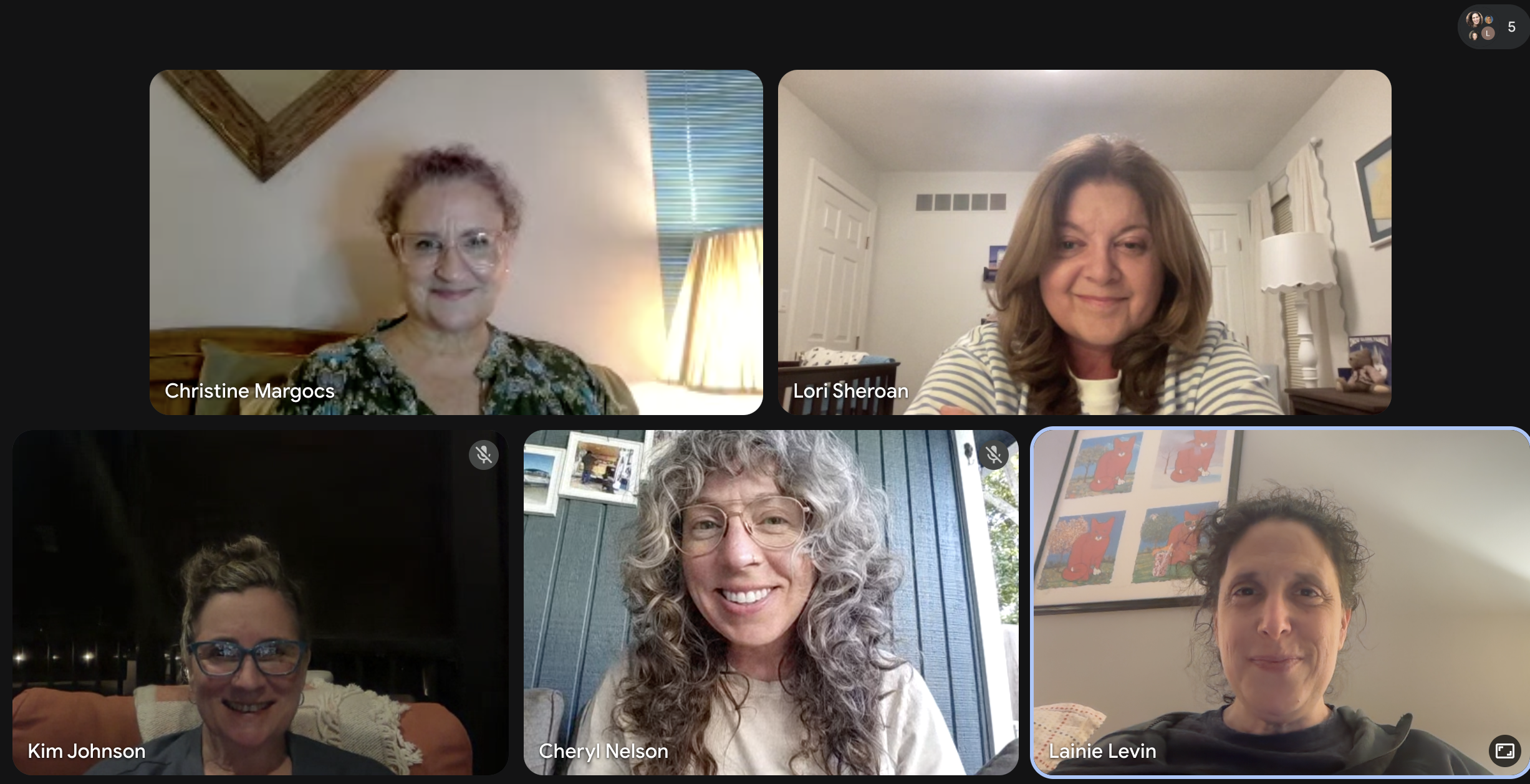
Screen shot of five participants
Look at us. We’re BEAUTIFUL =)

Slice of Life Day 15: Tip for Tomorrow

This morning, I was listening to the Two Writing Teachers podcast as part of my Sunday routine. I’m partial to the “Tip for Tomorrow” episodes, as they’re great for thinking about simple ways to “level up” my teaching. Melanie’s “tip for tomorrow” episode featured a discussion about morphology (hey, kids! that’s a fancy way of talking about word structure).

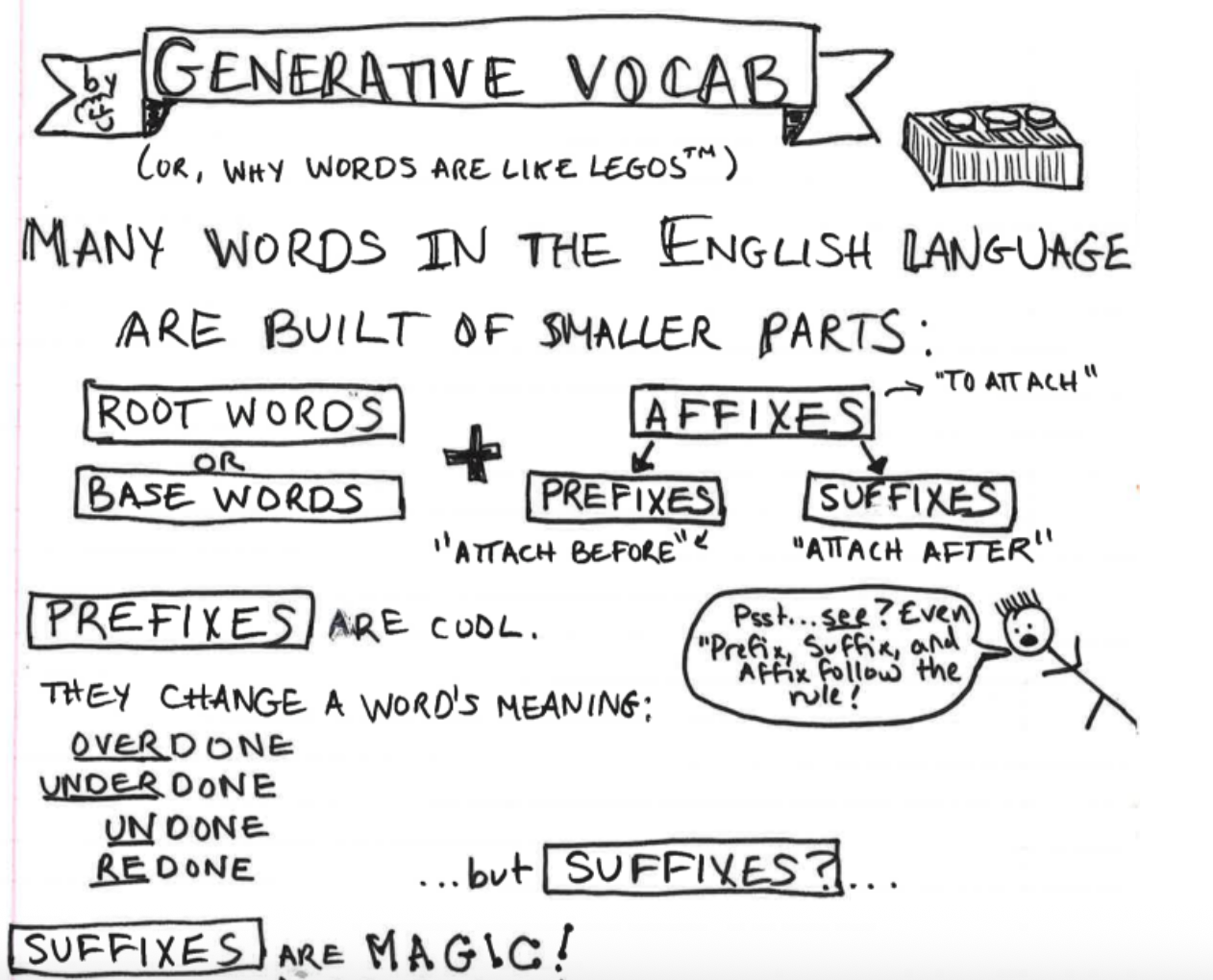
Melanie’s words were particularly validating to me right now, because that’s so much of the work I’m doing with students. I’m trying to support readers and writers across grade levels through vocabulary, and word structure is a meaningful way to do it. Right now, I’m asking my kids to think about words as Lego blocks: we can build them, we can take them apart, and it helps us make meaning:

Photocopy of a student reference source
Part of a reference page I’ve made for kids

Now that I’ve heard Melanie’s words, I’ll be doubling down on my efforts, and you know what? I’ll probably introduce them to the word “morphology.” Why? Because kids love big ideas. I’ll also be leaning into Melanie’s suggestions for using affixes to guide students as spellers.

I’ve got three student groups this week, and I can’t wait to share my learning. You’ve gotta love it when the “tip for tomorrow” is literally a tip…for tomorrow. Let’s go!

Slice of Life Day 14: Plan B

Today’s agenda, originally:

Grocery shopping
Comment on a million slices
Walk the dogs
Clean walls so they can be painted
Meal prep
Catch up on housework
Read
Do some PT exercises
Throw in a few loads of laundry

…until my husband’s friend came through with tickets to the Big 10 Championship Semifinals. Him: “Well, it might mean we have to cancel our dinner reservation.”

Me: “How is it even a QUESTION?”

So, we interrupt this day of Perfectly Logical Errands and Chores to bring you…FUN.

Clockwise, starting at top left: 1) me somehow not able to take a selfie and look at the camera simultaneously; 2) cool light-up bracelets that were synchronized throughout the arena (and lost their excitement after about 10 minutes); 3) Michigan cheerleaders riling up the crowd; 4) Michigan players taking the court (before almost rolling over for Wisconsin); 5) A shot of the scoreboard to start the game, just for my mom who’s cheering for UCLA from beyond; 6) A celebration of the proper team winning.

…oh. And those dinner reservations? We’re home in plenty of time. Win. Win. Win.

Slice of Life Day 13: Victory?

Today’s half day started with a friendly competition. Our staff was divided into teams, and we were to go against one another in a scavenger hunt. People were AMPED. One team even made T-shirts.

The principal came on the PA and announced that the weather wasn’t cooperating for the scavenger hunt, but we’d have a Kahoot quiz.

I ambled to the library at the appointed time, fully expecting to be chill about the whole thing (I’m a lover, not a fighter). And then my friend and colleague looked me straight in the eye and said, “WE. HAVE. To WIN.” I don’t know where she got this crazy level of competition, but I have never seen that side of her. (What can I say? My friends contain multitudes.) Our team named ourselves The Magnificent Seven and entered the Kahoot.

Wouldn’t you know, we won. We WON!

Photo of a Kahoot podium
I don’t know why our mascot was a tiger with a pie on its head. The world works in mysterious ways.

But…did we?

The scavenger hunt: It was supposed to be a race to our evacuation rally points. And the Kahoot quiz was about protocols for active shooter situations.

Let that sink in.

I’m supposed to pretend that this isn’t entirely messed up? I’m supposed to pretend that “escape the shooter” survival games for schoolchildren aren’t sinister and dystopian? Shall I ignore the fact the necessity for any of this speaks to critical faults in our societal foundation?

So yes, my team and I cheered. We high-fived one another early and often. We are anxiously anticipating the lunch we’re treated to as a prize.

But don’t think, for a moment, we can’t recognize the price at which it comes.