I would be remiss if I didn’t make today’s Slice of Life blog a photo essay.
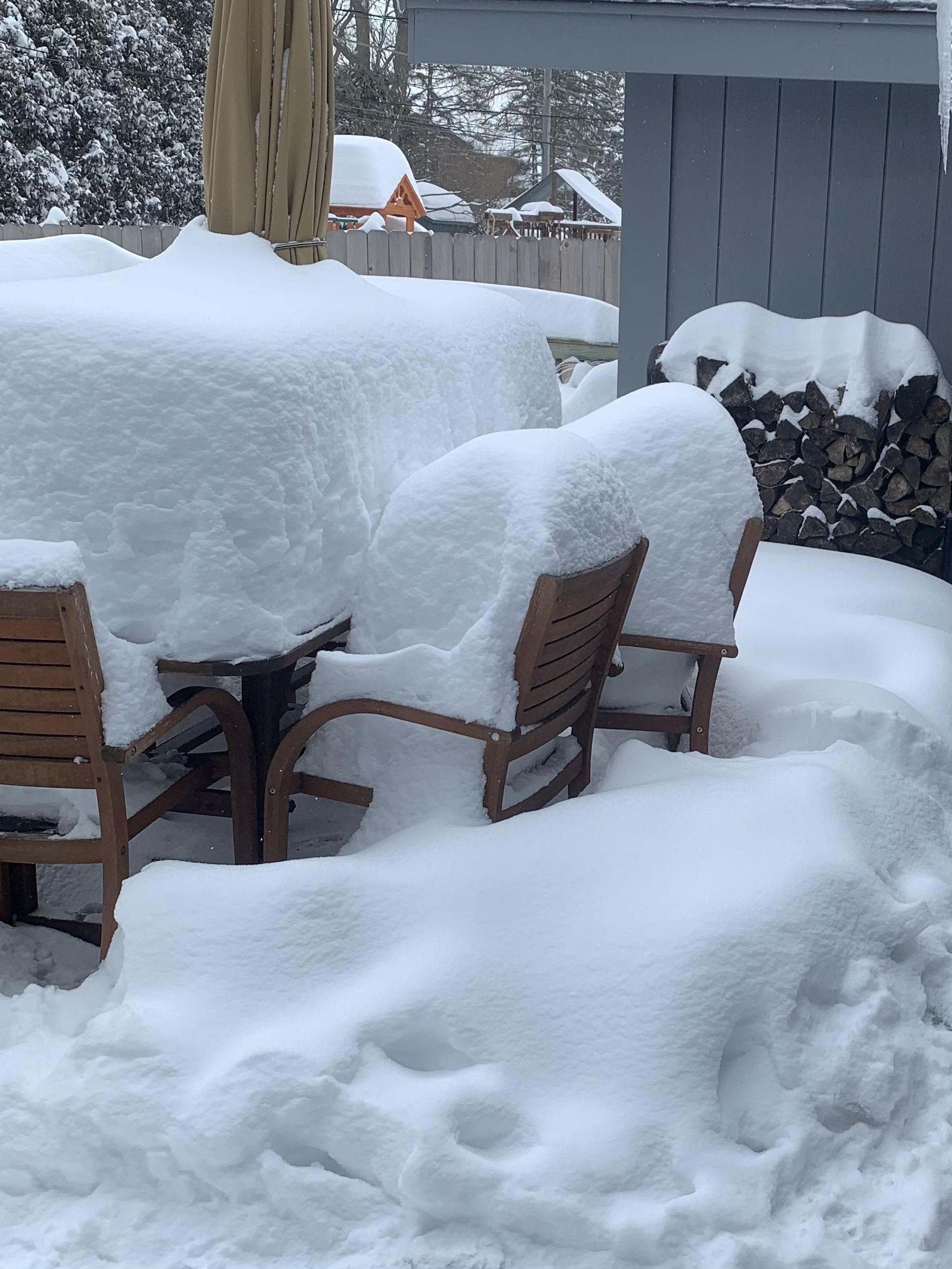
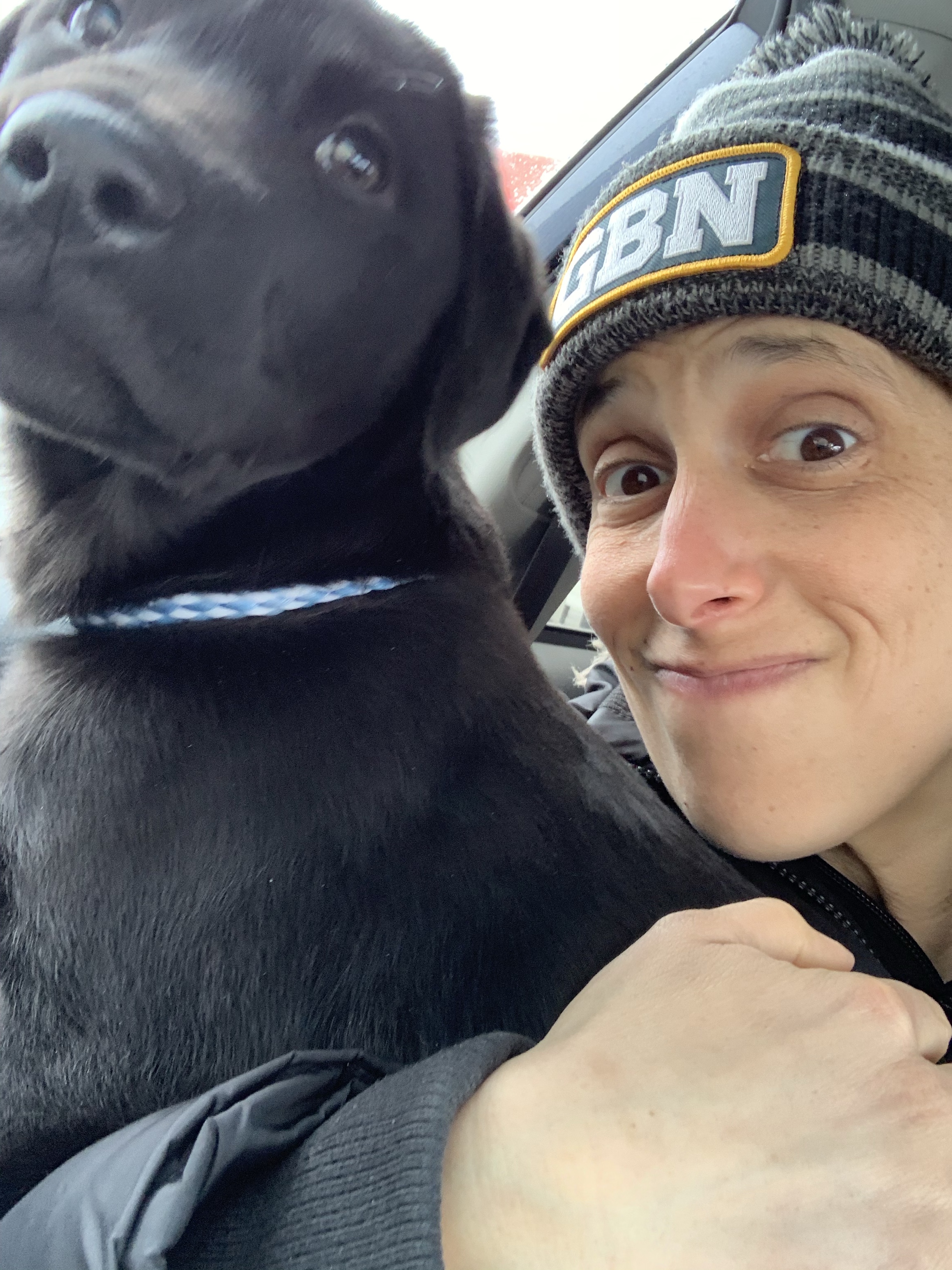
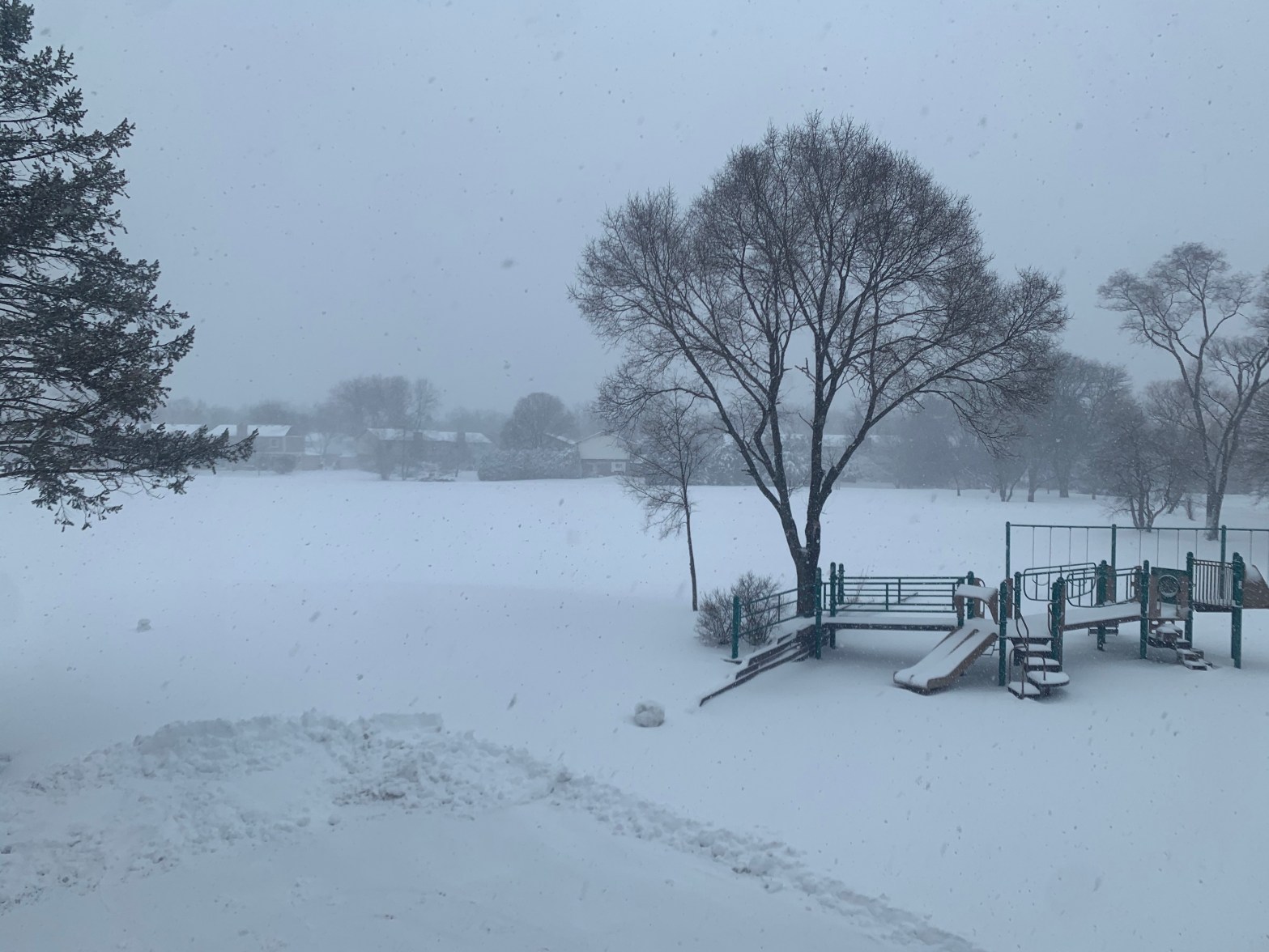
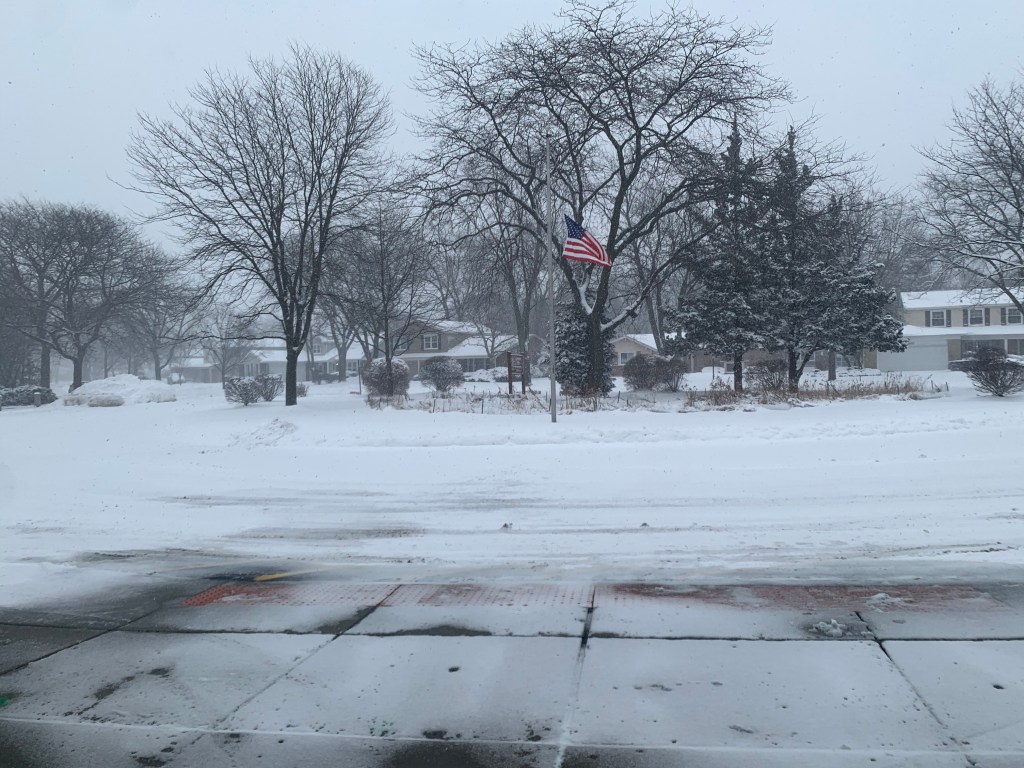
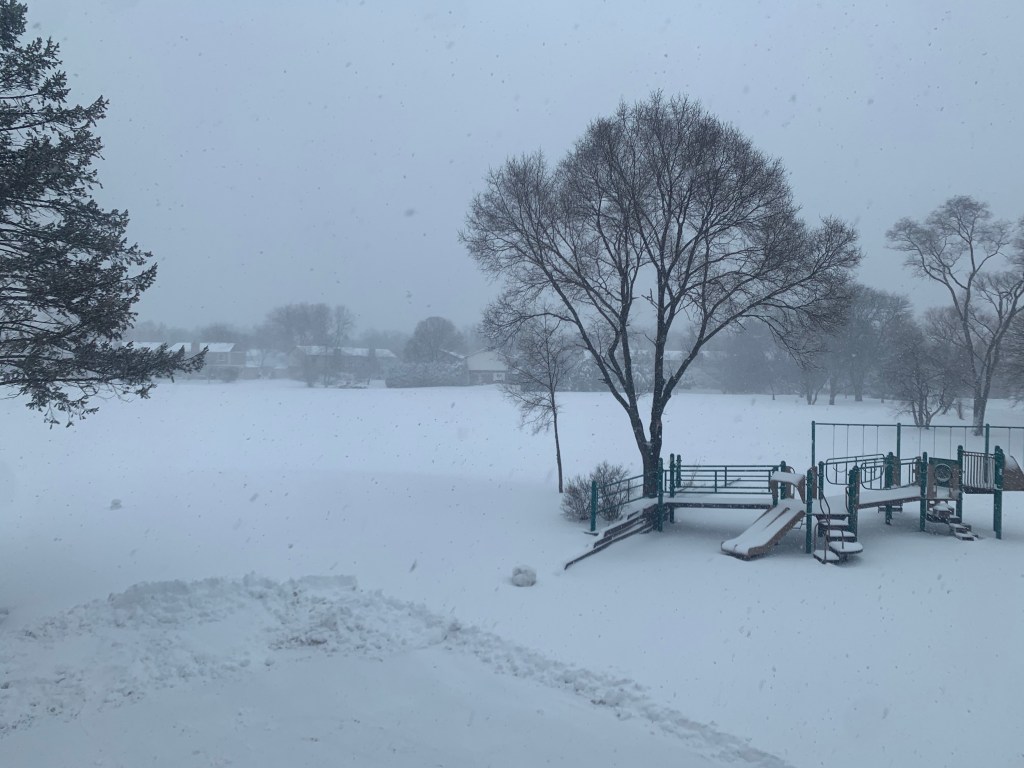
Here I am at home, with snow on top of snow on top of snow.
Oh look. More snow.
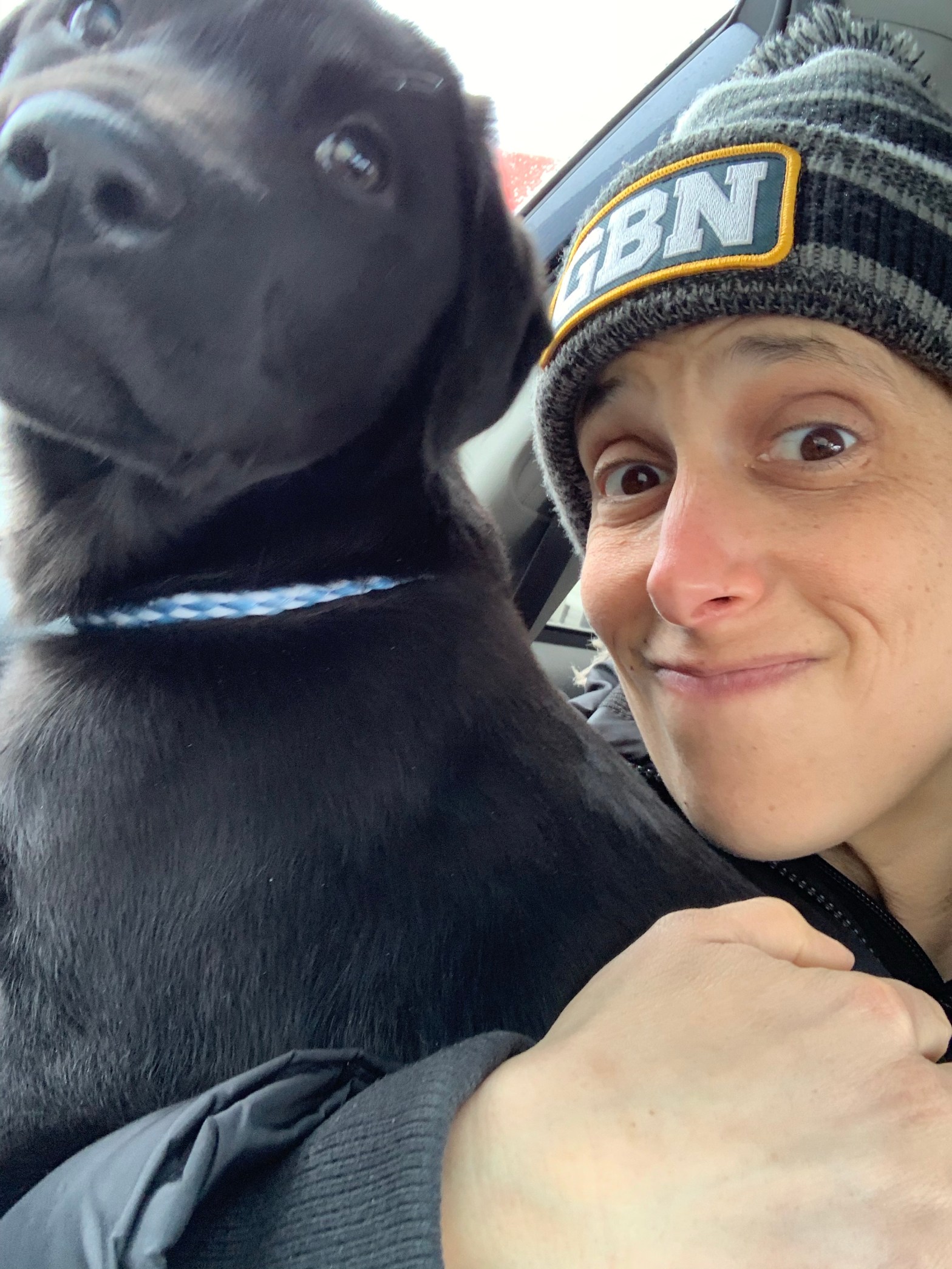
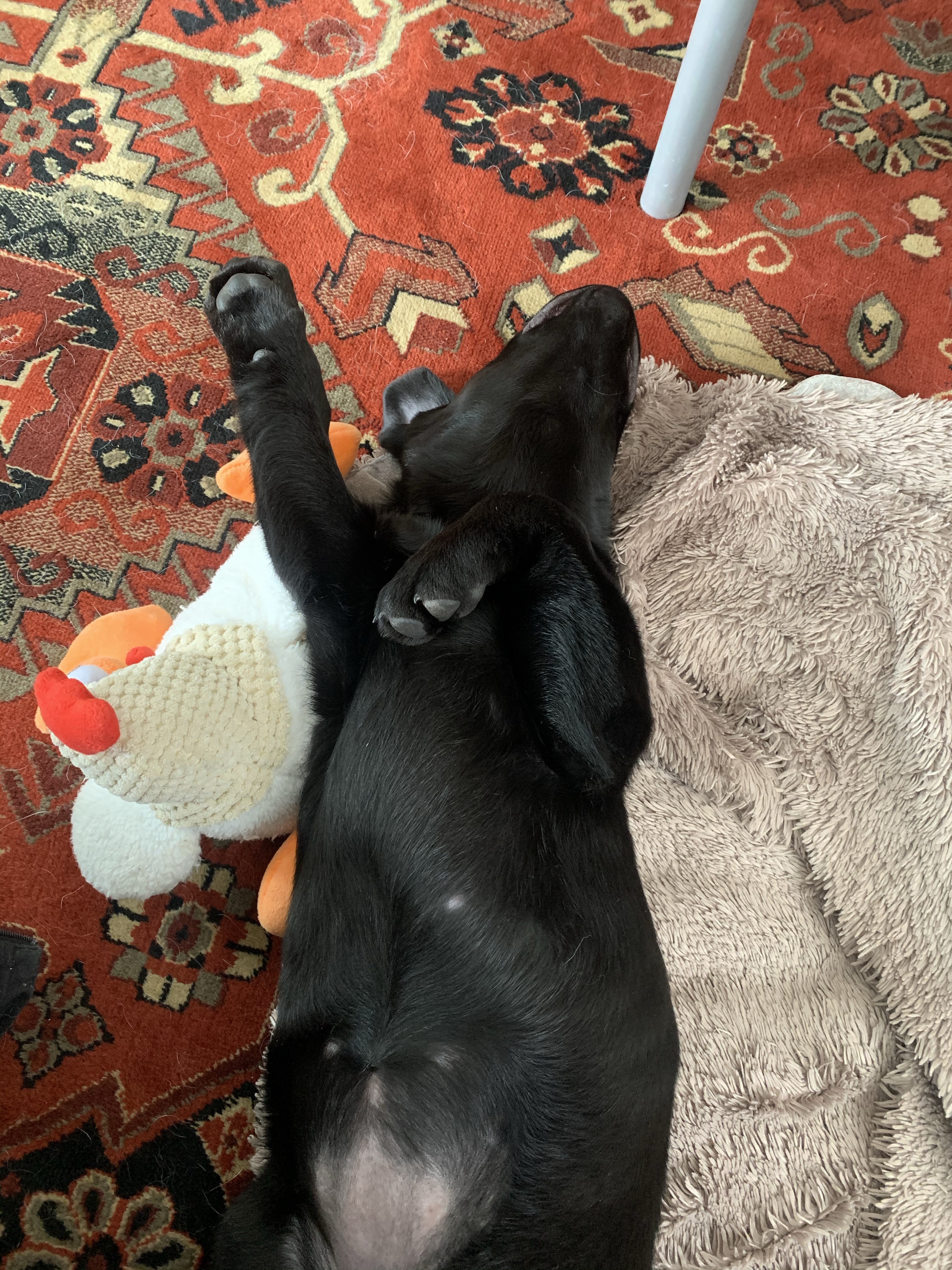
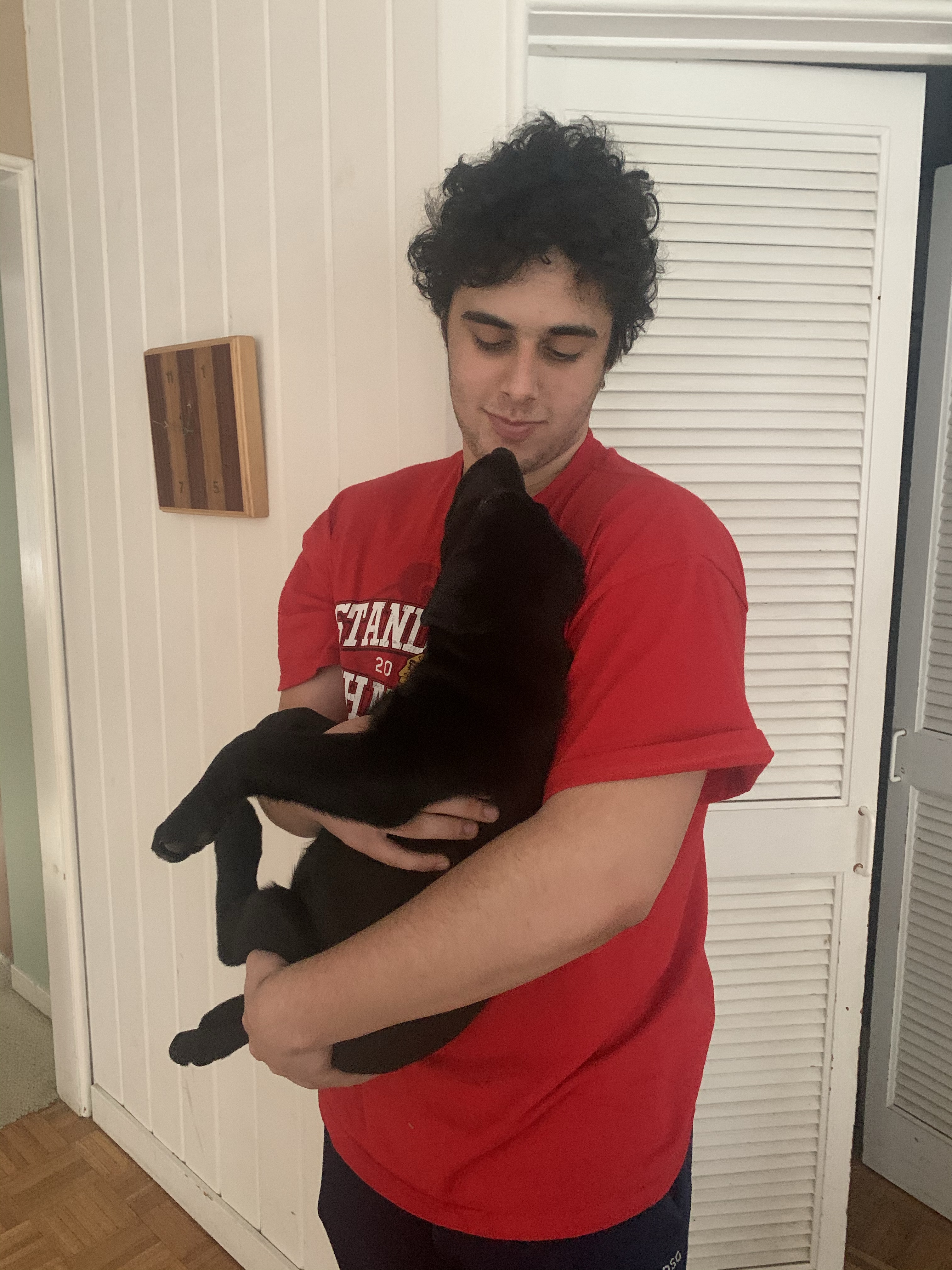
Ordinarily, THAT would be the news of the day. But there is more pressing news! And that is the arrival of this sweet new family member. Ladies, gentlemen, folx…I give you…Lilah.
Lilah – Hebrew for “night.” Actually, transcribed it’s better as “Lailah,” but figured we’d make pronunciation easier on people…
Was adopting a young puppy right now part of the plan? Nope. ALL the nope. But the opportunity arose, and we took it.
Here’s what I can tell you so far: 1. She is BEYOND cute.
2. My seventeen-year-old is SMITTEN.
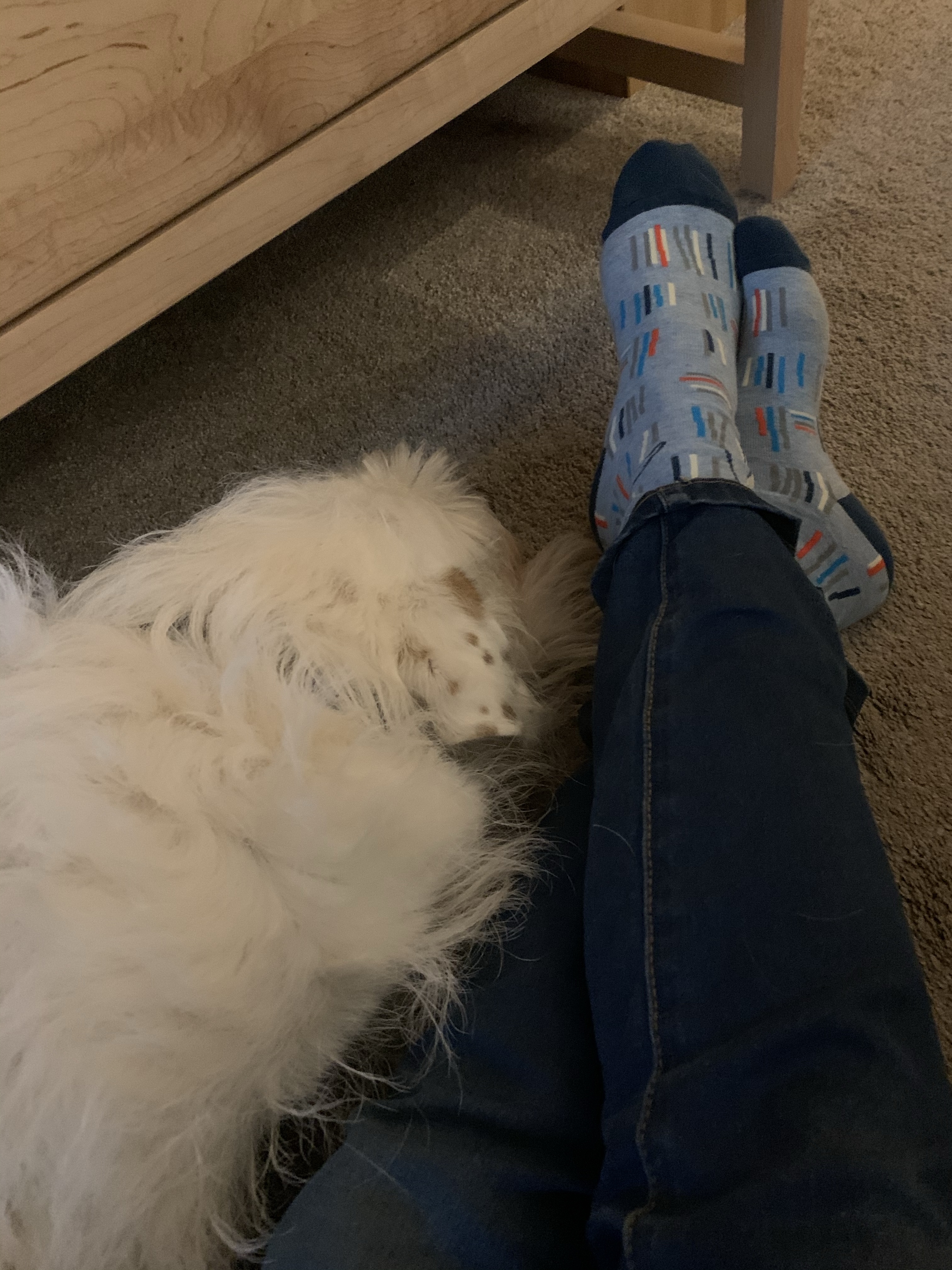
3. She’s not a huge fan of crate training, to say the least. 4. She’s vocal about said crate training. 5. She likes podcasts to keep her company. 6. Our other dog, Peep, is…nonplussed but tolerant.
7. We still have no idea what we have gotten ourselves into.
So, that’s today’s post. Cuteness and puppydom. Because our world needs much, much more of both.
She was kind, cheerful and honest. She always encouraged us with phrases like, “You’re cookin’ with gas!” She regaled us with stories of her little girl. She used Girl Scout Thin Mint cookies as prizes when she REALLY wanted to motivate us. Heck, she put up with ME as a first grader. That’s no easy task.
She was also the first Black teacher I had ever had.* And she was willing to talk about race.
One day, Mrs. Williams decided that she was going to teach us about skin color. Looking back as a teacher, I might guess that wasn’t just a random choice. I might guess that Mrs. Williams was responding to a comment or situation that came up in class. Or maybe there was something going on in the world that my first-grade brain wasn’t quite aware of. Whatever it boiled down to, Mrs. Williams decided that it was time for us to talk.
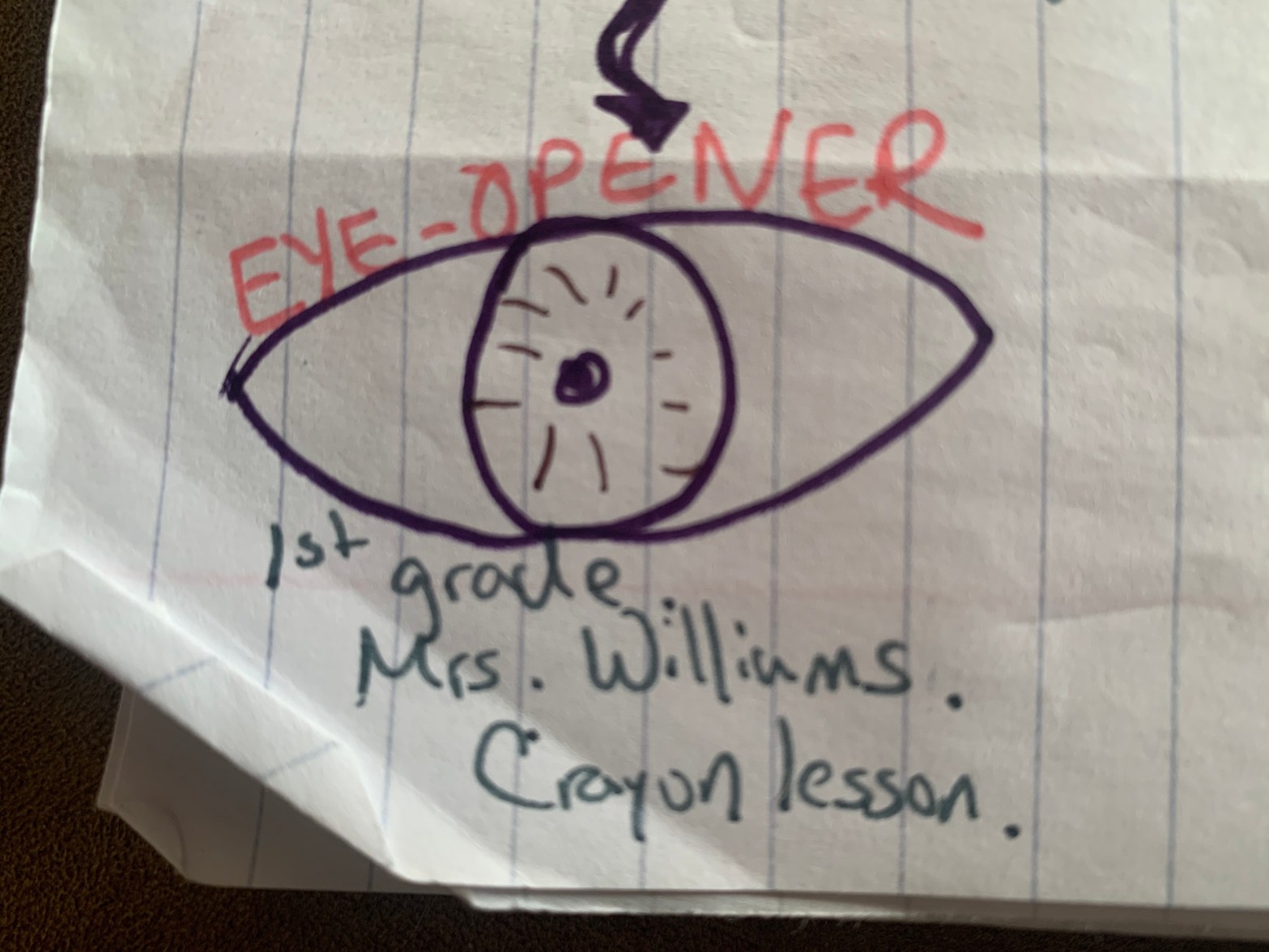
I’m going to guess that the lesson was longer than I remember, but what captures my memory most is when she held up two crayons: one white, one black.
Mrs. Williams held up the white crayon and said, “When people say they’re white, does their skin look like this color?” A crowd of giggling first-graders yelled back, “Nooooooo!” She held up the black crayon and said, “When people say they’re Black, does their skin look like this color?” We again yelled, “Noooooo!”
And that was at the heart of it. It was the first time I had ever engaged, on-purpose, in a conversation about what being Black or being white really means. About what race means, and what it DOESN’T mean. It was a way to tell a group of six- and seven-year olds that race is complicated. It’s not just what we see. It’s more complex than a label we might wrap around someone.
Thank you, Mrs. Williams. You were cookin’ with gas.
*I’m also beyond grateful to be able to say that Mrs. Williams was just my first Black teacher, and not my only. For all of the shortcomings that may have accompanied my schooling, I am glad that my school district made an effort to hire a diverse range of teaching and instructional staff. It was important for children of color in my community, but I’d say it was also important for me.
This year, I have had some SPECTACULAR fails in the classroom.
And I mean, not just the oh-man-this-is-tricky-how-am-I-going-to-figure-a-different-way-of-teaching-this-to-the-kids fail. That’s just an ordinary, run-of-the-mill, cost-of-doing-business, everyday type of fail.
No.
I’m talking about the holy-cow-this-lesson-is-crashing-and-burning-and-I-have-absolutely-no-way-of-backing-out-of-this-and-no-way-to-figure-out-in-the-moment-how-to-make-it-better-and-why-did-I-even-bother-getting-out-of-bed-today fail.
I’ve thought a lot about these fails.
They haunt me.
In the moment, failures as I’m teaching feel like I’m failing as a teacher.
The good news is that time offers perspective. And through the perspective of time, I get offered moments of clarity and growth.
You see, all my fails, at least the most spectacular ones, have had one thing in common: they all occurred when I was asking more of my students than they were ready for.
That got me thinking about what I do and why I do it. I was talking with my kids this morning about yet ANOTHER ambitious lesson we were going to try and take on. Here’s what I told them:
“Friends, I’ve been thinking a lot about what we’ve been doing, and I realize sometimes I mess up as a teacher. And when I think about the mistakes I make as a teacher, I kind of have to decide. Do I want to make the mistake of overestimating what you can do, and sometimes ask too much of you? Or do I want to make the mistake of underestimating what you can do, and asking less of you than you might be capable of?”
Down to a person, we all knew the answer to that question.
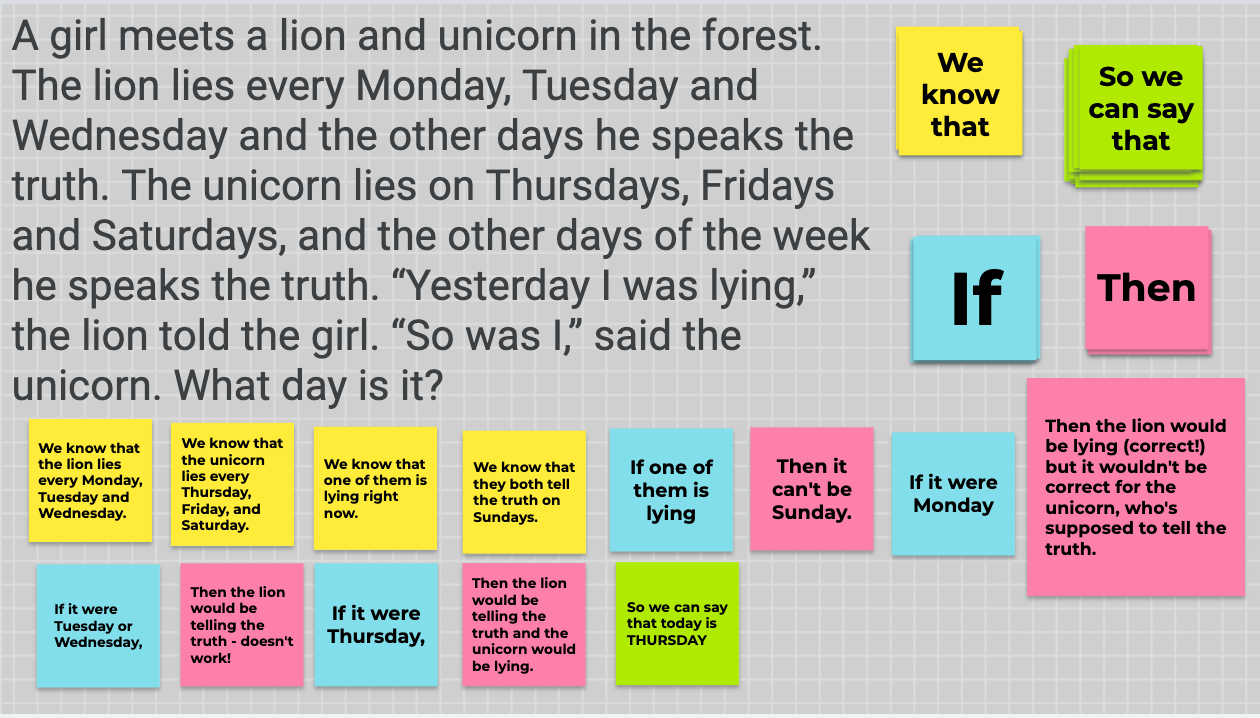
So yes. I will continue to shoot big, and yes. I will continue to sometimes miss big. But If I didn’t shoot big, Would I ever get reasoning like this?
Done as a group together (you may have to expand, but there’s good stuff here).
Would I ever get writing like this?
Fourth-grade spelling. Gotta love it.
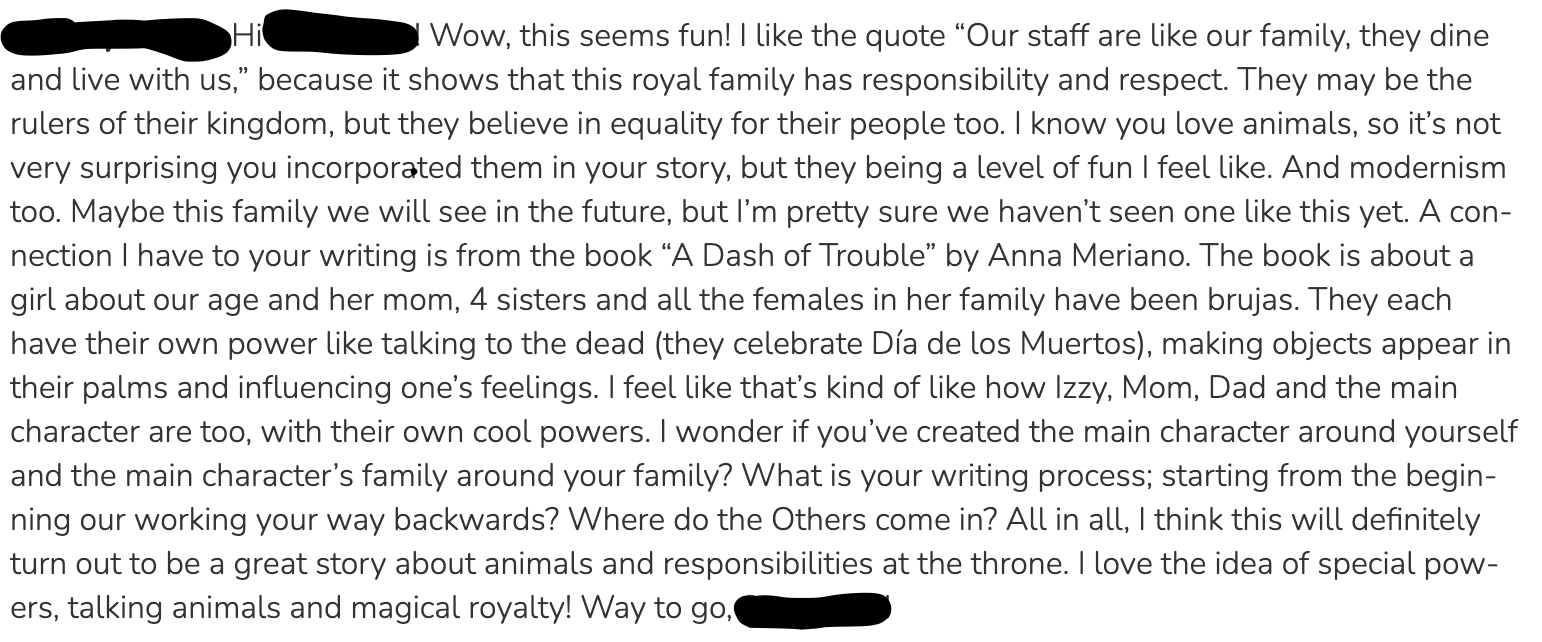
Would I ever get peer feedback like this?
This is what happens when you model feedback based on grown-up writing communities like the Slice of Life challenge.
Fact is, I wouldn’t trade all those difficult moments for the world, if it means growth for me and my kids. And maybe next time, these mistakes will pave the way to a smoother path next time, one that takes them – and my teaching – even further.
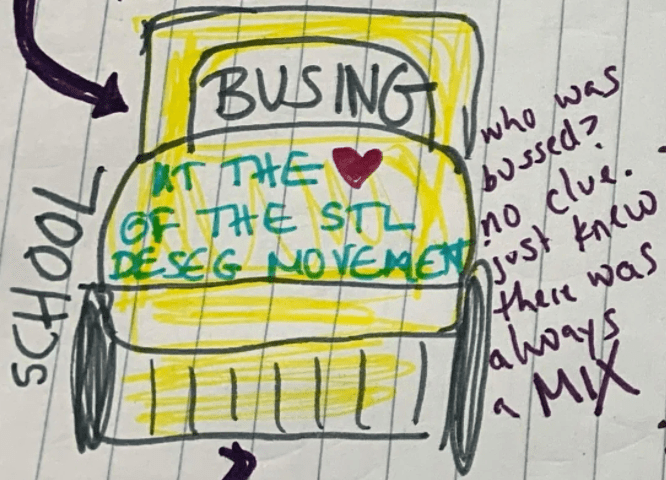
At Old Bonhomme School there was always a range of faces different from mine. I took for granted the mix of kids in my classes. As far as I knew, I went to a neighborhood school with neighborhood kids, and we all learned and played and together as one community.
What I didn’t know, and what I didn’t understand, was that the diverse mix of students wasn’t a natural part of living in Olivette. Yes, there was racial diversity within school attendance lines. But.
What I didn’t know, and what I didn’t understand, was that the diverse mix of students was largely due to the fact that I went to elementary school in Saint Louis at the height of school desegregation. That my classmates and I were a part of a grand social experiment.
What I didn’t know, and what I didn’t understand, was that many Black children spent long mornings and long afternoons on the bus to and from the city. That they left behind their own neighborhoods, their own neighbors, their own neighborhood schools to attend school in my district.
What I didn’t know, and what I didn’t understand, were the direct and open ways in which our communities were segregated in the first place.
What I didn’t know, and what I didn’t understand, was that we were all part of a system that, in the name of “quality education,” would separate kids from their communities to send them to other schools, rather than giving them what they needed where they needed it.
What I didn’t know, and what I didn’t understand, was that school desegregation allowed a number of kids to get an education in affluent districts while overlooking city communities. That if we really meant to desegregate schools, we’d improve all schools and bus children in both directions. Or we’d take away racial and economic barriers to housing equality. But we didn’t, and we didn’t. And we didn’t.
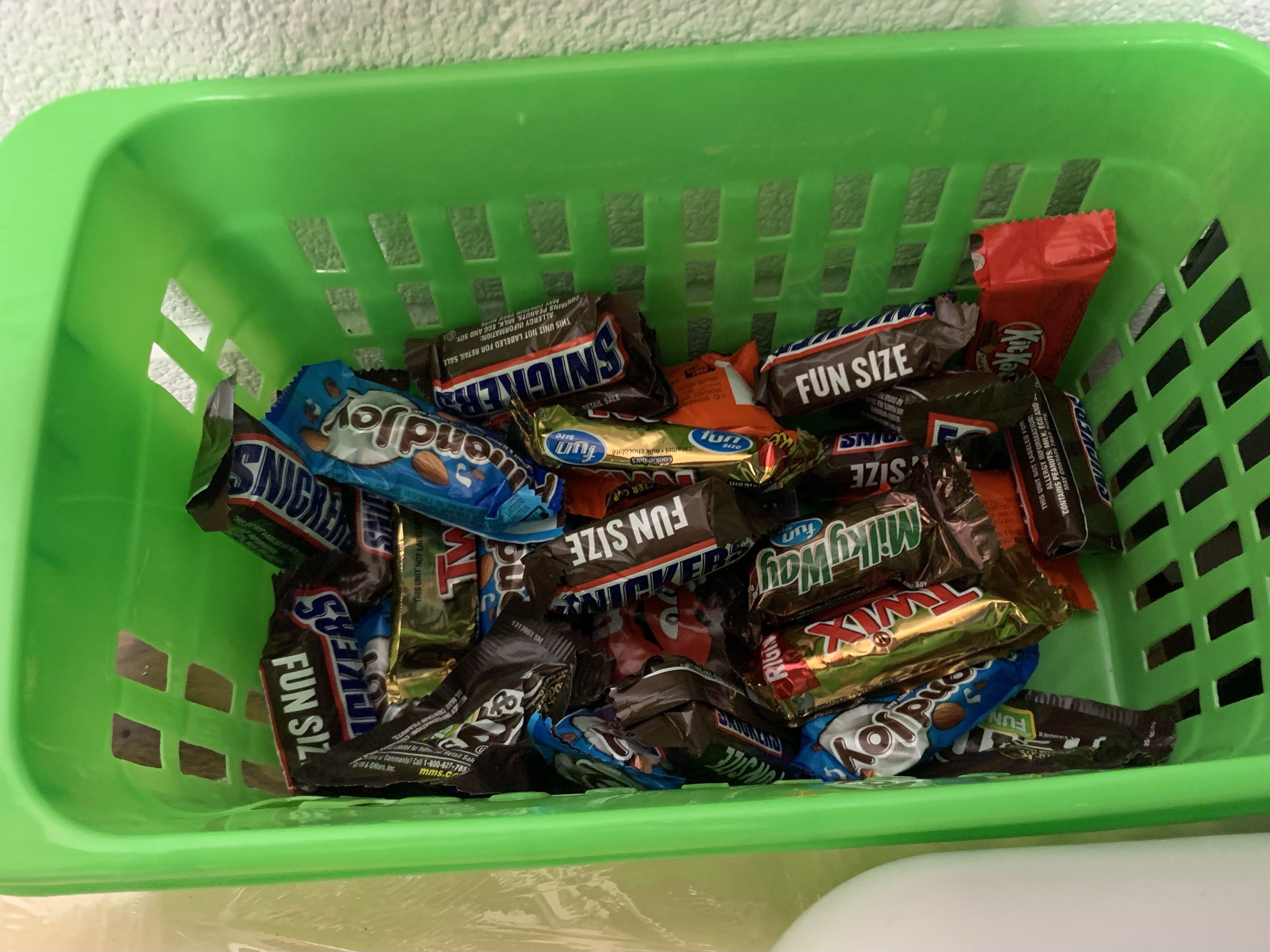
The stash, after a single day. Learn what you will.
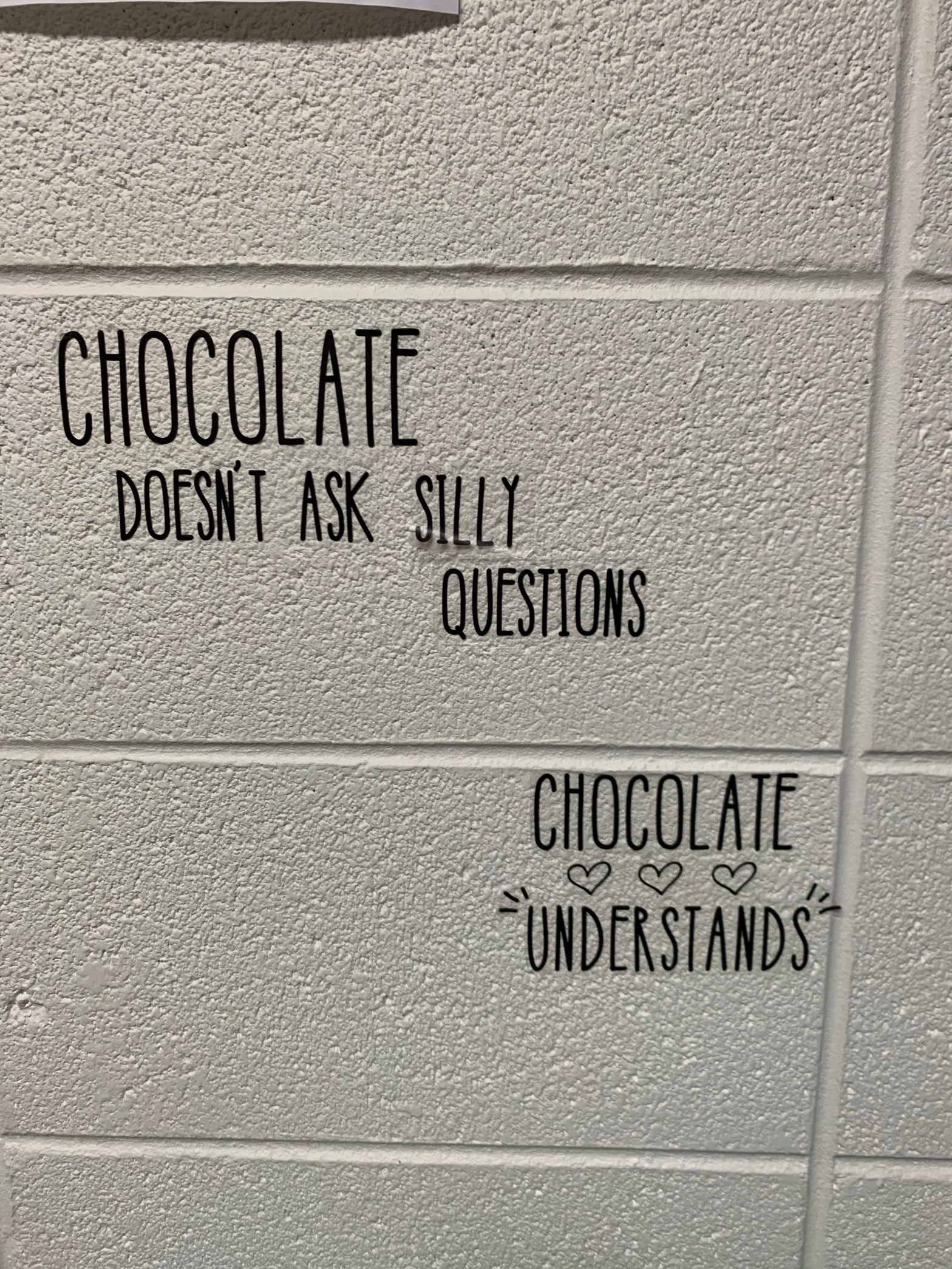
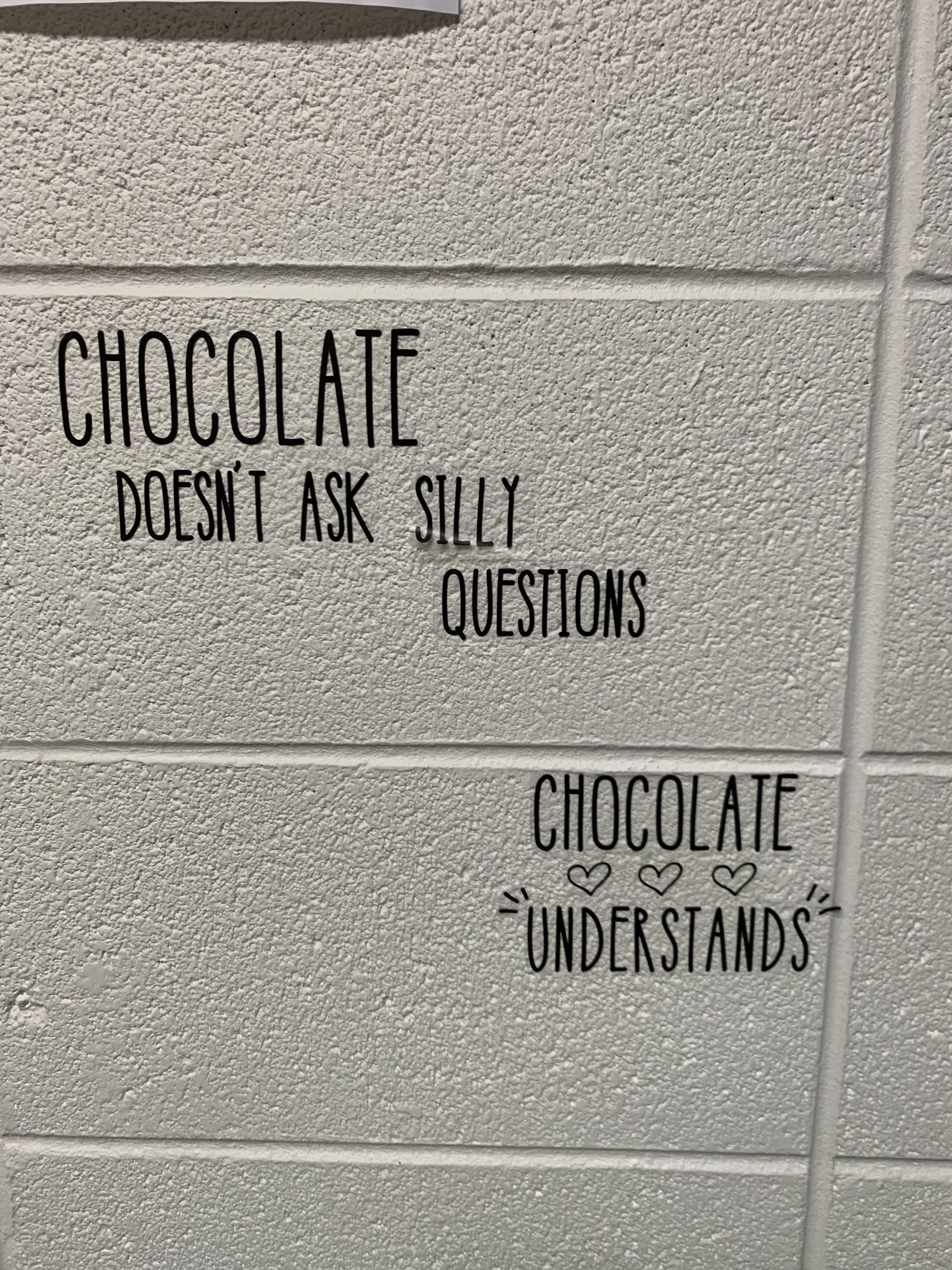
Upstairs, at one of my two schools, in the copy room, there sits a green plastic basket under a sticker on the wall that reads, “Chocolate doesn’t ask silly questions. Chocolate UNDERSTANDS.”
Can you feel the love?
There are a few of us who tend to be the chocolate fairies of this particular basket. For my part, I like to purchase a big fat ol’ bag of candy favorites from Costco each time I go. I find that I can fill the basket about three times from each bag. Here’s what I’ve learned from years of filling the chocolate basket:
Non-chocolate in the chocolate basket is an abomination. You *might* be able to squeak by with snack packs of Skittles, but seriously, folks. Don’t be putting your SweeTarts and hard candies in here. No one has the time for that kind of negativity in their lives.
The pacing of chocolate consumption is a barometer for staff morale. Sometimes, the goodies I dump in will last a full week. During report card, conference or standardized test seasons, I can fill the basket in the morning and it’s slim pickin’s by lunchtime.
There is a definite pecking order.I have found, when observing the progress of the chocolate basket, that certain treats get snapped up faster than Springsteen tickets. In order of popularity, we have: Peanut M&M’s 100 Grand Bars Reese’s Peanut Butter Cups Just about everything else Milky Way
Milky Way is the scourge of the chocolate world. It never fails. No matter how quickly the chocolate stash gets depleted, there are always five or six Milky Way bars that refuse to find a home. I mean, eventually the chocolate ecosystem balances out. SOMEbody likes Milky Ways, and people end up grabbing them. Some day I’d love to buy a big value pack of Milky Way bars, dump it in and see what happens. But I don’t, because I love my colleagues too much.
Chocolate is bad for us. And that doesn’t matter. Even if we don’t partake of the goodies in the copy room, sometimes it’s enough to look in that basket and remember that there’s someone who wants to take care of us. Someone who knows the contents of that wrapper won’t bring contentment, relief from the unrelenting obligations and pressure of teaching, or a sense of agency when we feel powerless – but knows it will brighten our day nonetheless. And that knowledge brings with it a satisfaction similar to the crunch of that candy shell.
I knew that I could always go wandering around, exploring my neighborhood or the streets around me. I knew how much fun it was to walk into town and visit the stores up there. I knew that there was always a mix of black and white kids on my street and in the neighborhood that I played with.
I didn’t know my history, though. I didn’t know that Olivette may have been a sundown town, that even though I saw black and brown faces in the community, they were not always welcome on my side of Olive Street Road, especially after dark. I did not know that the way Olivette residents were treated in my neighborhood was different and the way they were treated in the Indian Meadows subdivision.
What else did I miss when I was little? Was I oblivious to differential treatment from teachers? Was I blissfully unaware of how shopkeepers and workers treated me differently when I went to Glaser drugstore?
The truth is, I don’t know. The only way to find out is to reach out to my childhood and elementary school friends. I can ask them about their experiences, and learn if or how they were different from mine.
Olivette was good to me growing up. Was it good for everyone? There’s only one way to find out.
We don’t have a snow day today, and I’m about as happy as a wet cat.
Something deep within me ached for a day back at home, even if it still involved a full day of classes and meetings. The thought of getting up early, bundling up, clearing off the car, of navigating barely passable roads, and repeating the process at day’s end just seemed…disheartening.
But here I am, standing at my desk and ready for my first meeting of the day. And on days like this, it’s easy for me to give in to discouragement and crabbiness. Grouchiness fits like an old pair of jeans.
Unfortunately, that makes for a REALLY long day.
Instead, I’m setting my sights on the moments of gratitude and joy that I know await me today, in no particular order:
warm chai colleagues who check in…and mean it a women’s night with folks who ground and inspire me fresh grapefruit soft socks the wisdom of eleven year-olds the Slice of Life writing community a dog who’s happy to see me deadlifts in the garage the perfect hard-boiled egg, dipped in salt podcasts helping folks do what they do, only better long, deep breaths
…and all of the surprises this day has awaiting me…
At my own birth? At the first moments I can remember? The very first time I noticed people were different?
Or with Parents and Grandparents, With the many ways they interacted with Without Above Others who were different? (All while they tried hard So very hard To become the not-different themselves)
How can I even Start To explain my own upbringing without A long Look At how the people who shaped me Were shaped?
How They always had a “girl” – I best remember Katie, Grown woman in starched white Always there to clean To smile To say “Yes, ma’am” Even as she grumbled through the Friday evening dishes Even though I wondered how someone that old Could still be a girl
Or Johnny from Westwood, Starched black and white suit, Impeccably shined shoes, Always there to bring More bread to the table, The day’s specials A smile, a laugh, a joke – I can’t remember, but only hope He wasn’t called “boy”
This is where I started, What I was born into What I carry
I don’t want To come from there, Don’t want to own That piece of me – But where there is pain There is love Where there is honesty There is vision Where there is reckoning There is growth
or, Reflections from the Evening of January 19, 2021: How to Manage to Stay Afloat for the Next Eighteen Hours and Hold up the Walls of the World While it Watches, Waits, Breathless
Pull yourself away from noise.
Pet your dog.
If you don’t have a dog, pretend to have a dog.
Drink something warm.
Listen, just for a moment, to tomorrow’s poet, Amanda Gorman.
No. I mean really. Go listen. It’ll take you two minutes.
Pass the tissues.
Get a good bedtime.
Wake up. Look at yourself in the mirror.
Don’t just find the visage in the glass. Find the PERSON behind it.
I’m a member of my school district’s newfound committee on Equity, Diversity and Inclusion.*
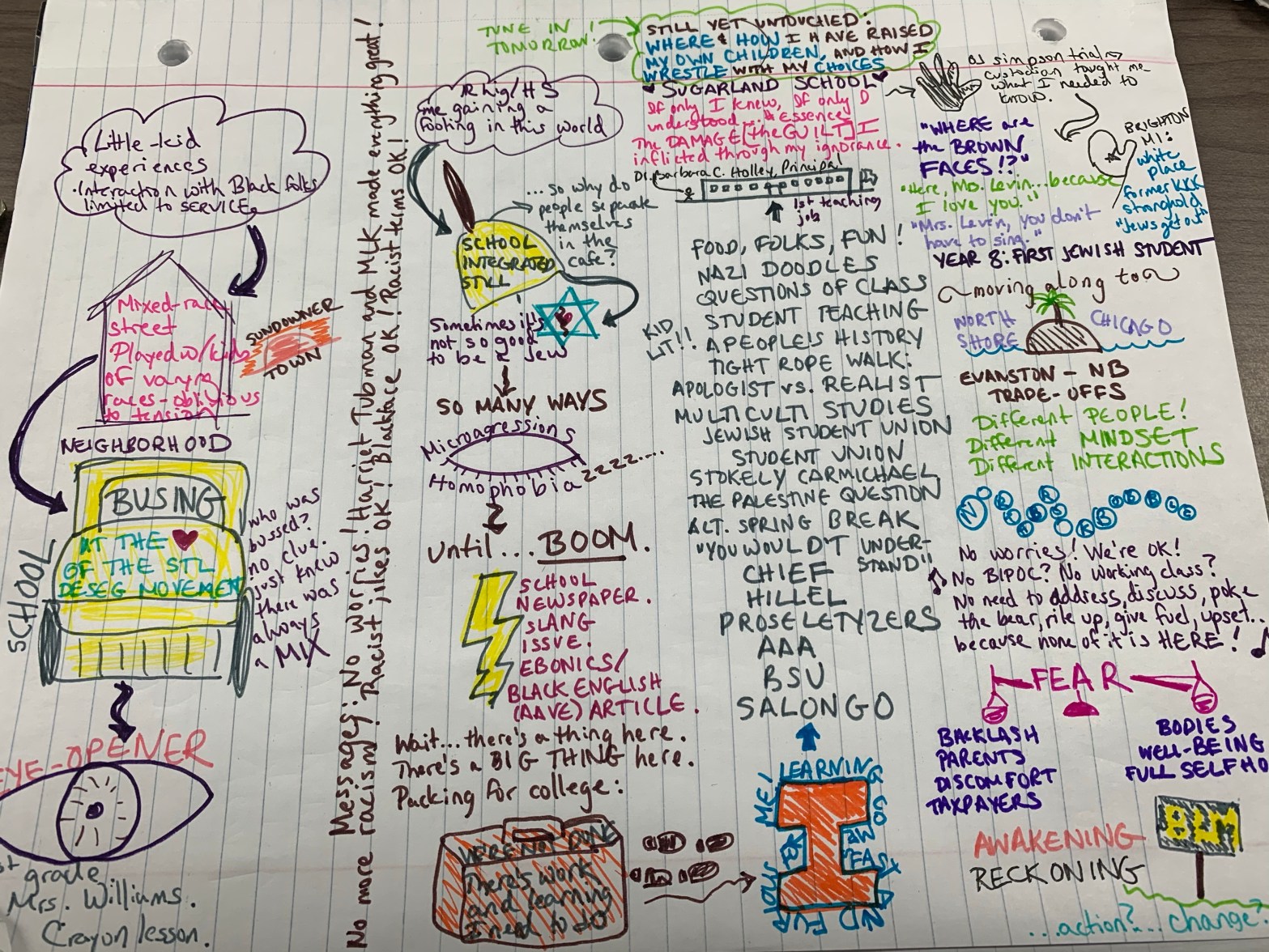
For our last meeting, we were asked to compose a racial autobiography, to craft a reckoning of our experiences with race and identity. (Check out the Pacific Educational Group to learn about their work!)
There were a LOT of questions. And as someone who’s been thinking about and reflecting on race for a really, REALLY long time, I didn’t know how I could put it all together. I’m a person of words, but I couldn’t imagine the number of words I’d have to summon to do the assignment justice.
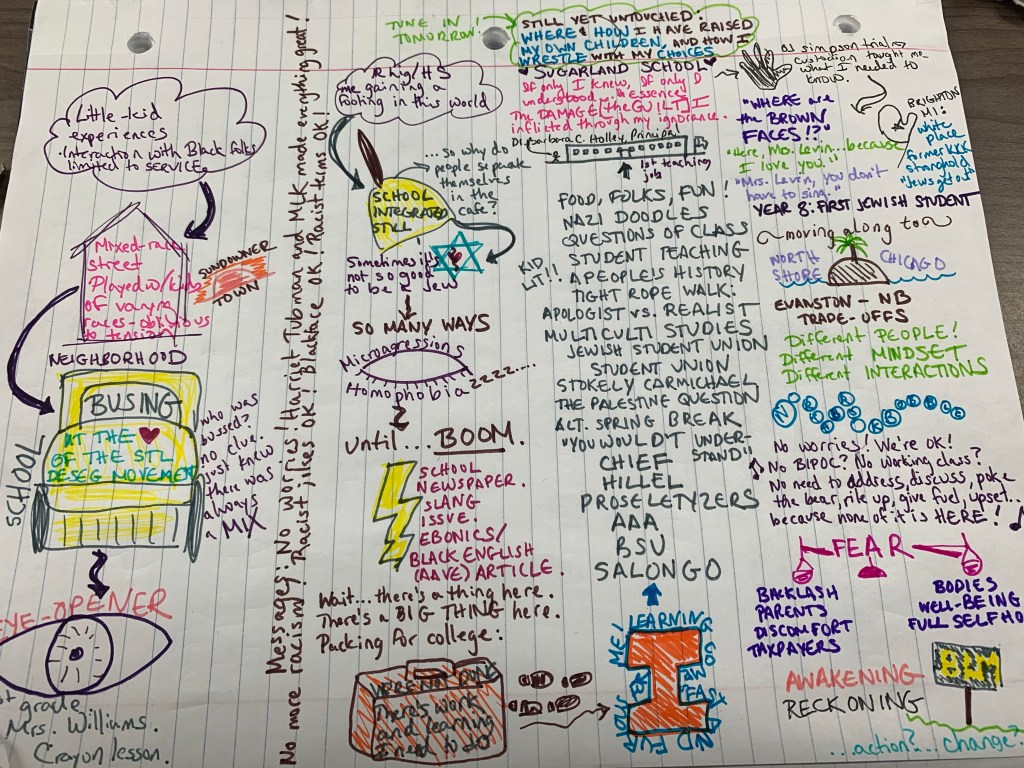
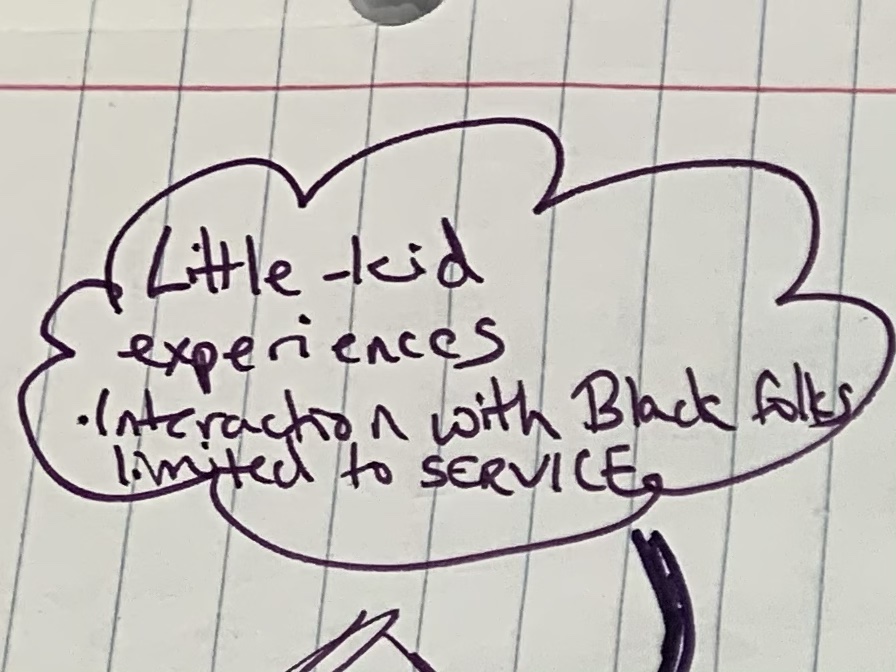
So I did whatever I do in situations where I need a direct connection with my thoughts: DOODLE. I grabbed my flair pens and started drawing. Instead of a written document, I came up with this:
As I drew, it occurred to me how very MUCH there is here for me to unpack. There’s a lot more here than pictures can convey. I’m going to HAVE to put words to these ideas. And I’ll have to do it one step at a time.
That’s where you come in. I’d love for you to join me on this exploration.
Each Sunday, I’m going to work my way through this autobiography, one image at a time. I’ll share the stories and memories that connect with each part. I know I’ll encounter moments of growth that I wish I could relive. I’ll also have to think back on choices that I wish I could remake.
Here’s hoping I see you right back here next week!
*Yes, I have some general thoughts about committees for Equity, Diversity and Inclusion. And also thoughts about those words needing to be capitalized. We won’t get into that right now. The good news is, I’m hopeful about what our group can accomplish. So there’s that. It’s also led by Regina Armour. So there’s also THAT.